
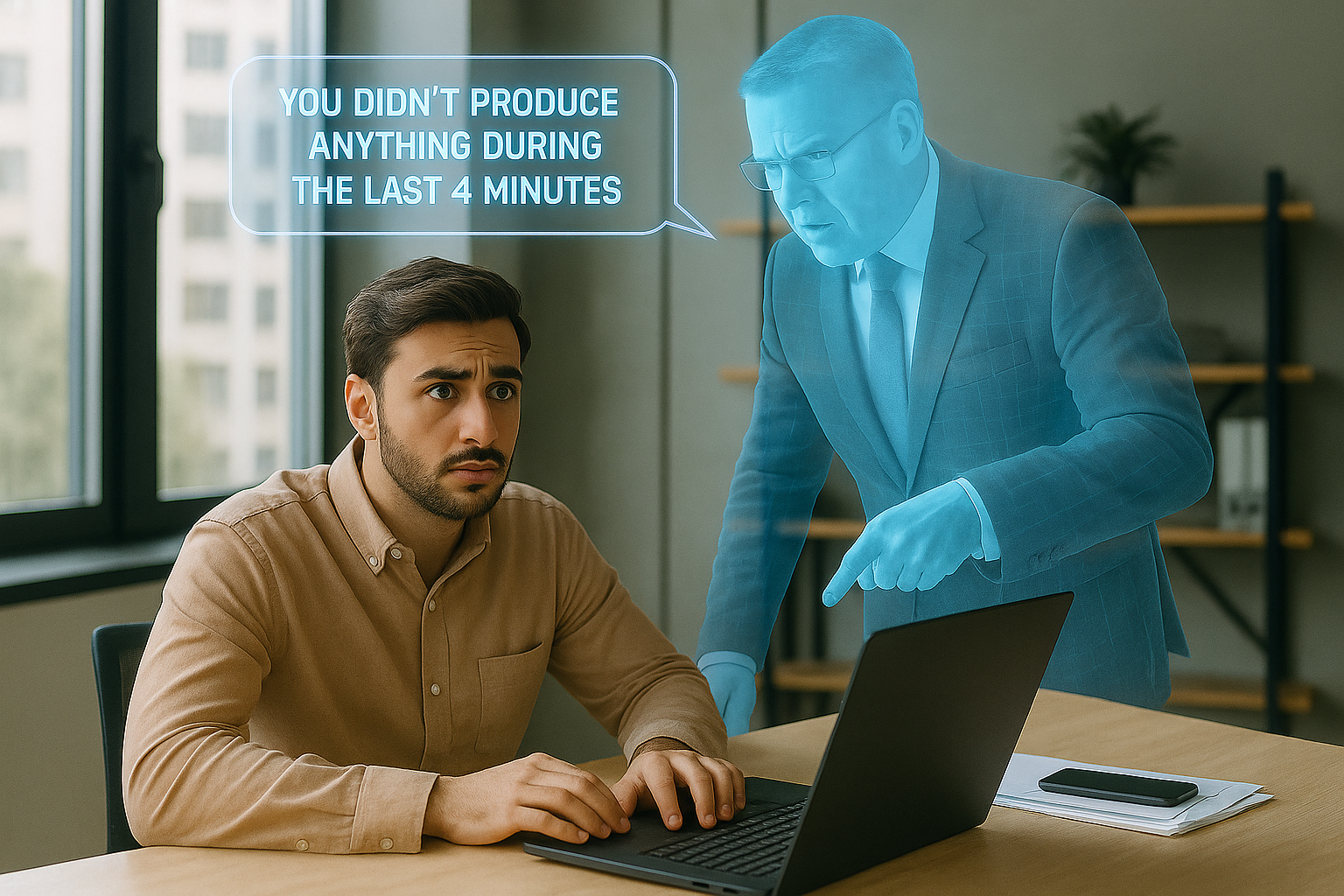
For most of history, bosses were human. Sometimes kind, sometimes cruel, sometimes inspiring, sometimes incompetent — but human. You could read their moods, argue with them, make a case.
Now, more and more workers are discovering that their real manager isn’t a person at all. It’s an app. A scheduling system. A dashboard. An algorithm deciding who gets shifts, who gets performance warnings, who gets cut.
This started in gig work — ride-share drivers managed by opaque ratings, delivery couriers nudged by surge pricing. But it’s spreading quickly. Warehouse pickers, nurses, call center agents, even white-collar professionals are finding their workflows measured, scored, and optimized by systems they barely see.
Welcome to the age of algorithmic bosses.
From Gig Apps to Every Industry
We’ve known about Uber’s algorithmic management for years. Drivers don’t have a human dispatcher; they have a system deciding routes, pricing, and even deactivations. A Harvard Business Review study found that drivers often describe the app as “a boss that never listens, never explains, and never forgives.”
But what was once unique to gig platforms is creeping everywhere.
- Warehouses: Amazon’s monitoring systems track every movement, flagging “time off task” and triggering warnings.
- Healthcare: Nurses in some U.S. hospitals are routed by AI scheduling systems that allocate patient loads.
- Offices: Knowledge workers find their keystrokes, emails, or meeting participation scored for productivity dashboards.
As labor lawyer Veena Dubal has argued: “What started in gig work is becoming the default mode of management — invisible, data-driven, and difficult to contest.”
The Promise and the Fear
Algorithmic management isn’t all bad. Done right, it could fix longstanding problems.
- Bias in shift assignments could be reduced.
- Scheduling could be more predictable.
- Performance reviews could be grounded in evidence, not favoritism.
But the risks are real. When decisions are automated, workers often feel dehumanized. They can’t appeal to a machine’s empathy. They can’t ask, “Do you understand my situation?”
A 2023 survey by the Trades Union Congress in the UK found that 60% of workers managed by AI felt “significant loss of autonomy”, while only 14% felt AI made their work fairer.
The divide isn’t the tech itself — it’s how it’s designed, and whether people have a voice in shaping it.

Dignity Dashboards
Some researchers are pushing for what they call “dignity dashboards” — systems where workers can see the data being used to evaluate them, challenge inaccuracies, and even set boundaries.
Instead of invisible scoring, imagine a transparent panel:
- “Here’s your performance data this week.”
- “Here’s how it compares to goals.”
- “Here’s how you can contest it.”
This isn’t sci-fi. The EU’s AI Act already requires some transparency for high-risk AI systems in employment. And a handful of companies are piloting dashboards where employees co-own their data.
As Andrew Pakes of Prospect Union put it: “If algorithms are going to manage people, people need the right to manage the algorithms.”
Right to Slow Time
One of the hardest things about algorithmic bosses is speed. Systems optimize for throughput. Humans don’t.
A nurse rushing between patients, a warehouse worker sprinting to keep metrics up, a call center agent cutting off a distressed caller — all because the system is measuring seconds, not humanity.
That’s why some unions are calling for a right to slow time: protected hours, pauses, or limits where efficiency metrics can’t override care or safety.
It may sound quaint, but it’s practical. Burnout costs money. Turnover costs more. Slowing down can be good business.
Union-Aware Agents
A more optimistic vision is that workers won’t just be managed by algorithms — they’ll be represented by them.
Imagine a workplace where each employee has a personal agent negotiating with the company’s scheduling system:
- “My childcare obligations mean I can’t take shifts past 7 p.m.”
- “I’m part of a union that has negotiated a cap on overnight rotations.”
- “My health data suggests I need rest breaks every two hours.”
These aren’t requests whispered to a sympathetic manager. They’re constraints coded into the system.
Labor researcher Jamie Woodcock suggests: “AI could be a bargaining tool, not just a boss — if workers are allowed to bring their own agents into the room.”
The Optimistic Angle
It’s easy to see algorithmic bosses as dystopian. And sometimes they are. But if we reframe them, they could make work better.
- Clearer rules, less favoritism.
- More predictable scheduling.
- Better accommodations for health, family, and personal needs.
The question isn’t whether algorithms will manage. They already do. The question is whether we design them as tools of surveillance, or as tools of dignity.

Everyday Futures
Consider three possible futures:
- A gig driver can see exactly how pay is calculated, with the option to contest unfair deductions.
- A nurse’s agent negotiates shift assignments around her childcare responsibilities, ensuring fairness without endless paperwork.
- An office worker has protected “focus blocks” in their calendar that algorithms cannot override — a new right, baked into code.
Each is a glimpse of what it could look like if we took the good — and left the dehumanizing parts behind.
Looking Forward
Bosses have always shaped how work feels. Sometimes they inspire, sometimes they grind. Algorithms are no different.
The danger is pretending they’re neutral. They’re not. They reflect choices — about what to measure, what to optimize, what to value.
The opportunity is realizing that we get to make those choices. That unions, regulators, and workers themselves can push for algorithmic systems that serve people, not just productivity.
The future of work won’t be decided only in boardrooms or server farms. It will be decided in the small daily interactions between humans and their invisible bosses.
And if we’re deliberate, maybe those bosses won’t just be efficient. Maybe they’ll be fair. Maybe even humane.
Leave a Reply