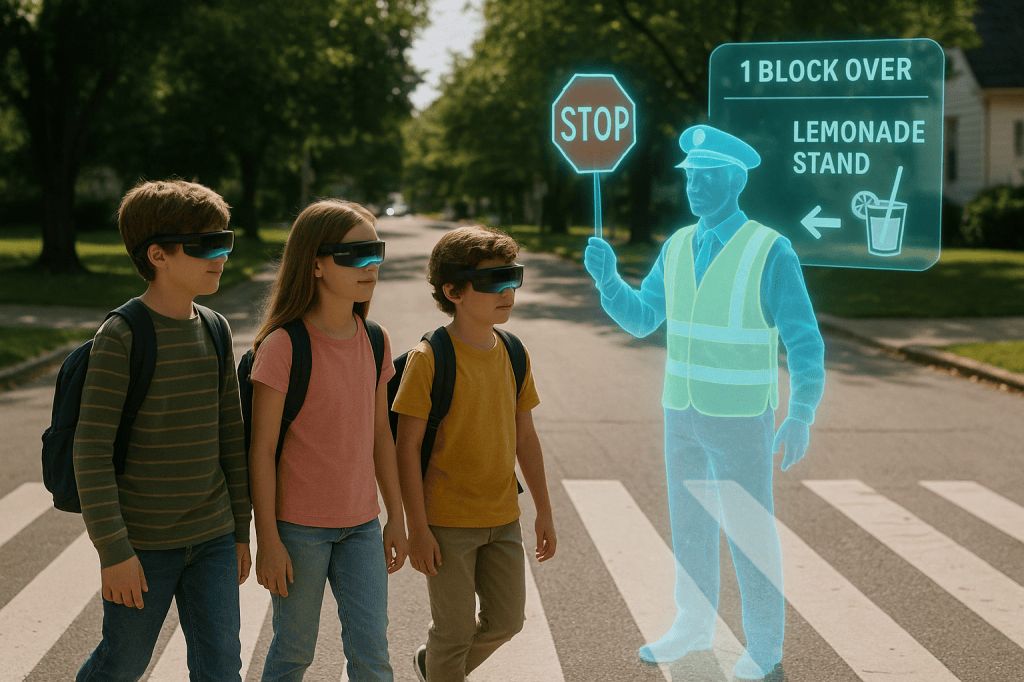
Technology often sneaks in through the side door. First it’s a toy, then a tool, then suddenly it’s everywhere. The telephone. The television. The smartphone.
AI is following the same pattern — but with one crucial difference. It isn’t just another device or channel. It’s a substrate. It seeps into how we talk, how we shop, how we organize, how we imagine the future. It’s not just changing interfaces. It’s becoming one.
Which is why the next interface isn’t really glass, or voice, or wearables, or even agents. The next interface is culture.
Because the deepest question isn’t how we’ll interact with machines. It’s how we’ll interact with each other once machines mediate so much of daily life.
Culture as Operating System
Think about it this way: every technology embeds cultural assumptions.
- Search engines assumed the value of links as reputation.
- Social media assumed the value of attention as currency.
- Smartphones assumed constant availability as progress.
AI agents assume delegation: that giving decisions to proxies is good, that optimization beats friction, that speed is always a virtue.
But those assumptions aren’t inevitable. They’re cultural choices. And cultures can push back.
As anthropologist Genevieve Bell reminds us: “Every technology carries the fingerprints of the culture that made it. The question is: whose fingerprints will shape the future?”
The Promise and the Peril
We can imagine two very different cultures of AI:
- One where agents quietly collude, commerce is rigged, and human choice narrows invisibly.
- Another where agents expand autonomy, protect dignity, and free us for more human work and play.
Both are possible. Both are already emerging in fragments.
The challenge isn’t just technical guardrails or smart regulation (though those matter). The challenge is deciding what we collectively want from these systems — and holding companies and governments accountable to that vision.
Civic Agents: Infrastructure for Everyone
One hopeful direction is the rise of civic agents — AI systems designed not to sell us something, but to serve public needs.
Imagine:
- A citywide agent that helps residents navigate benefits, transit, safety alerts — accountable by design, not by profit.
- A healthcare agent that translates diagnoses into plain language, tailored to cultural context and literacy levels.
- A neighborhood agent pooling data for local good — not sold, but shared, governed collectively.
We’ve seen glimmers of this. Estonia’s “KrattAI” framework, for example, treats AI as a digital public servant. Singapore is experimenting with AI assistants for government services. Even some U.S. cities are piloting “civic chatbots” for 311 hotlines.
The question is whether these experiments will scale, and whether they’ll be trusted.
Commons Licensing: Who Owns the Future?
Culture isn’t just what we build. It’s what we share.
Today, most of the data feeding large models comes from the public internet — scraped without permission, monetized without compensation. That imbalance can’t hold forever.
A more hopeful vision is commons licensing: communities pooling data on their own terms, deciding how it can be used.
- A farmers’ cooperative licensing crop data to train better climate models.
- Indigenous groups creating digital sovereignty agreements over cultural knowledge.
- Local libraries curating archives for public agents, with consent baked in.
This isn’t utopian. The EU’s Data Act already gestures at portability and collective governance. Projects like Solid (from web inventor Tim Berners-Lee) imagine personal data pods that individuals can share selectively.
It’s messy, but it points toward a culture where data is a commons, not just a commodity.
Rituals of Refusal
Culture also grows from what we say no to.
Smartphones taught us this. After years of hyperconnection, people invented rituals of refusal: phone-free dinners, screen-free Sundays, digital detox retreats.
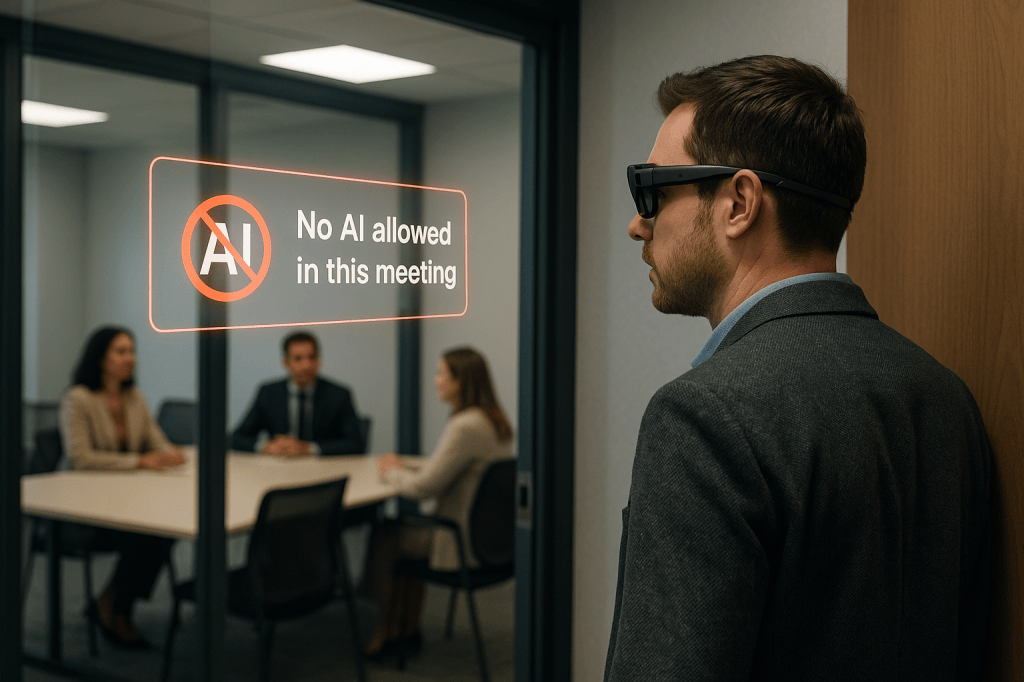
AI will demand the same. We may need deliberate spaces where agents are switched off, where conversation isn’t mediated, where surprise is allowed to enter unfiltered.
Maybe restaurants will advertise “agent-free zones.” Maybe families will ritualize certain decisions as human-only: birthdays, baby names, breakups.
Refusal isn’t rejection. It’s balance. It’s a way of saying: some parts of life are too precious to outsource.
The Human Economy
If agents handle the buying, selling, scheduling, and optimizing, what’s left for us?
Plenty. In fact, maybe the best parts.
- Relationships: care, empathy, presence — the things machines can’t fake convincingly.
- Creativity: art, play, storytelling, invention.
- Meaning-making: rituals, communities, moral choices.
Economists sometimes frame this as “the human economy” — work and value defined not by efficiency, but by humanity.
The risk is that we undervalue it, because it doesn’t fit neatly into GDP. The opportunity is that, freed from endless admin, more of us might actually get to participate in it.
Expert Voices
Sherry Turkle, MIT sociologist: “The danger is not that AI will know us too well, but that we will forget how to know ourselves.”
Andrew Ng, AI pioneer: “The technology is not deterministic. The outcomes depend on the incentives we create, the norms we adopt, the culture we build around it.”
Cory Doctorow, writer and activist: “The next fight isn’t over gadgets. It’s over governance. Who gets to decide what the future feels like?”
These aren’t technical points. They’re cultural. And they remind us that the real interface here isn’t an app — it’s us.
Everyday Futures
It helps to bring it down from theory:
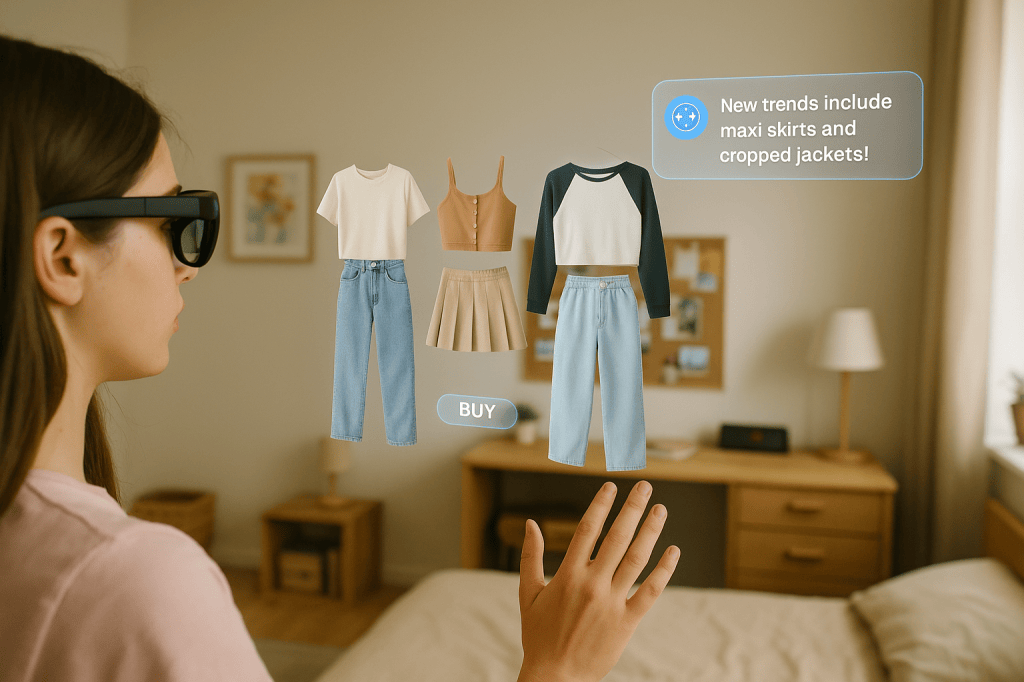
- A teenager grows up never “shopping,” but still expresses identity through the clothes their agent negotiates for them. What rituals will replace browsing the mall with friends?
- A retiree feels safer because their agent handles bills and scams — but worries about losing the small triumph of balancing a checkbook.
- A small-town library runs its own agent, curating local history for residents — a digital commons sustained by volunteers.
Each story is about culture, not code. About how we live together when decisions are partly delegated, partly shared.
Optimism With Eyes Open
It’s easy to see all this as dystopia: colluding agents, invisible funnels, loss of spontaneity. And those risks are real.
But culture isn’t passive. We’ve reshaped technologies before — turned telephones from business tools into lifelines, turned radio into both propaganda and music, turned the internet from defense research into memes and marketplaces.
We can do the same with AI.
If we approach it with care, with refusal rituals, with commons licensing, with civic imagination, then maybe this won’t just be the story of optimization. Maybe it will be the story of reclaiming time, dignity, and presence.
Looking Forward
The next interface isn’t a screen, or a voice, or a pair of glasses. It’s culture itself — the norms, rituals, laws, and values we weave around the machines.
That means the future of AI isn’t primarily a technical challenge. It’s a cultural one.
We will decide — in small ways, in daily choices, in policy fights and family dinners — whether this interface narrows us or expands us. Whether it hollows us out, or frees us to live more human lives.
And that decision won’t be made in Silicon Valley alone. It will be made everywhere — in classrooms, kitchens, offices, town halls, and late-night conversations between friends.
If the next interface is culture, then the question is simple, and enormous: what kind of culture do we want to build?


Leave a Reply