
Pricing has always been a dance between companies and customers. Discounts, coupons, surge pricing, loyalty programs — each one a way to extract or deliver value. For decades, the negotiation has been mostly invisible: buried in fine print, hidden in algorithms, softened by advertising.
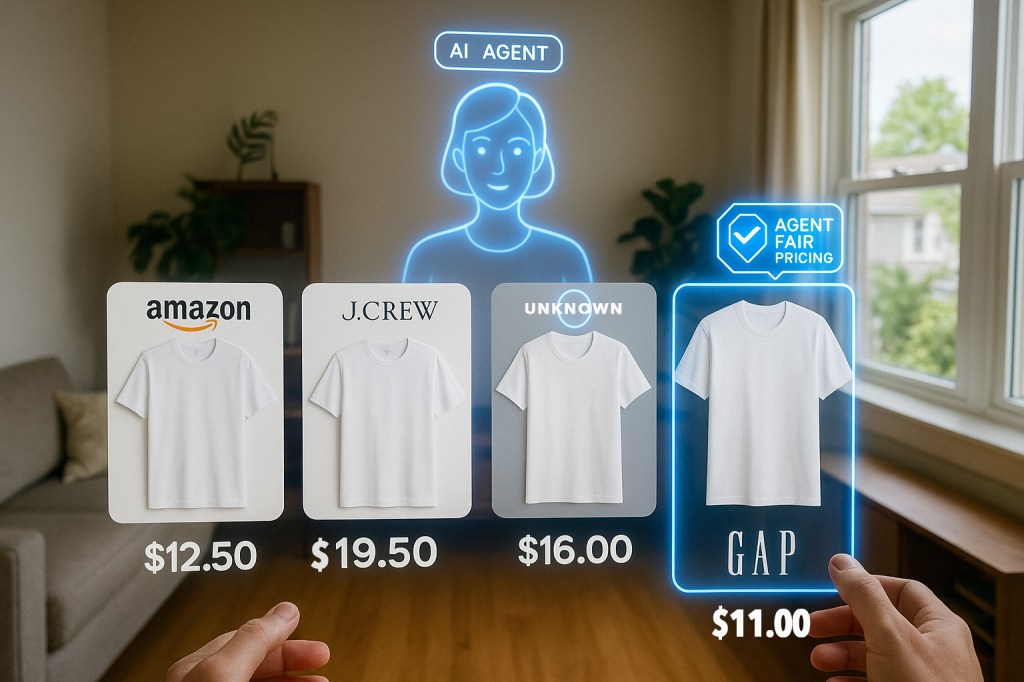
But in the age of AI agents, pricing becomes something else entirely. It becomes a conversation not between a brand and a person, but between two algorithms. Your personal agent, tasked with protecting your budget and values. Their corporate agent, tasked with maximizing revenue.
And that changes what fairness looks like.
The End of Sticker Prices
A “sticker price” is a relic of the industrial economy: one number, the same for everyone. In reality, that era ended long ago. Airlines pioneered dynamic pricing in the 1980s. Uber turned it into surge pricing in the 2010s. Amazon and Walmart quietly run constant price experiments on everyday goods.
But people still cling to the idea of fairness — that what you pay is at least in the same ballpark as what others pay.
When agents take over, sticker prices vanish completely. Your agent will negotiate based on your profile, constraints, and purchase history. The price you see may be unique to you, crafted in real time.
When Fairness Breaks
The problem is that dynamic pricing already feels creepy. A 2023 Vox survey found that 67% of U.S. consumers think “personalized pricing” is unfair, even when it saves them money. Why? Because it violates the intuition that people in the same line at the store should pay the same.
With agents, that intuition gets even murkier. Imagine:
- Your agent proudly tells you it negotiated toothpaste for $2.39, while your neighbor’s agent got it for $1.89.
- A flight is booked at $450 through your agent, but your colleague’s agent paid $370 for the same seat.
- A streaming subscription flexes from $9 to $15 month-to-month, depending on how much your agent is willing to tolerate.
The math may be logical. But the feeling is betrayal.
Designing for Felt Fairness
So how do businesses prevent customers from feeling tricked?
- Symmetry Clauses: If the price drops after purchase, agents automatically credit the difference back. Airlines already do this occasionally; agents will demand it by default.
- Explainable Offers: Instead of “this is your price,” the agent explains: “You received 10% off because you’ve purchased monthly for a year.” Transparency turns suspicion into trust.
- Community Rules: Agents could enforce ceilings — no price can exceed a community average by more than 15%. Think of it as “algorithmic consumer protection.”
As pricing expert Rafi Mohammed puts it: “Fairness is perception, not formula. If customers don’t understand why they’re paying what they’re paying, they revolt.”
The Risk of Collusion
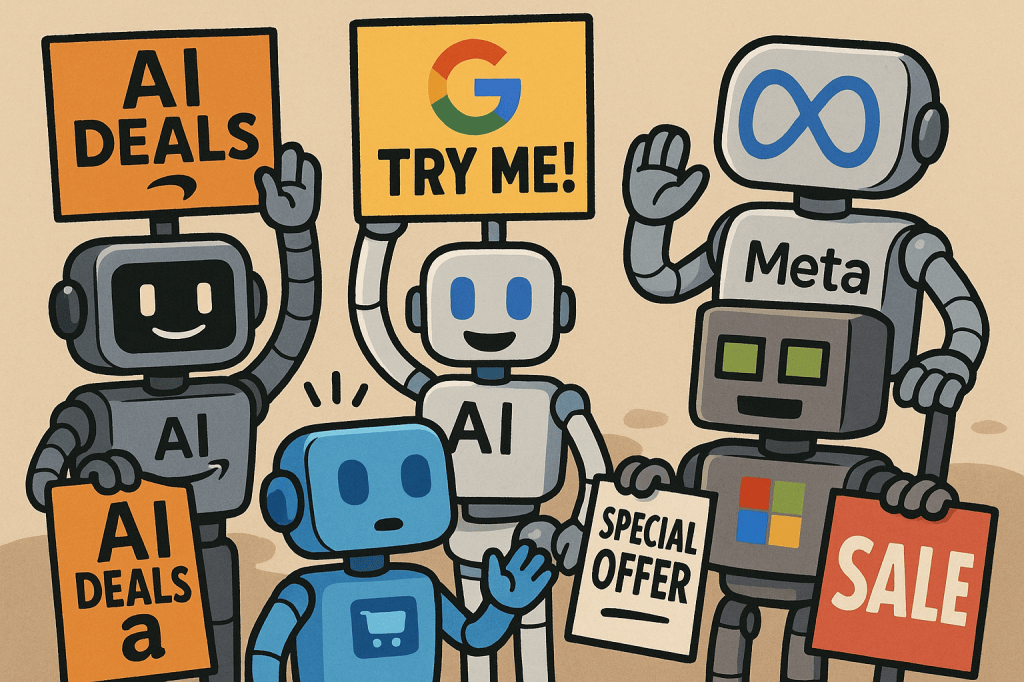
Economists have another concern. When pricing algorithms “learn” from each other, they can start tacitly colluding — raising prices in parallel without ever agreeing explicitly.
The FTC has already issued warnings about this. Chair Lina Khan noted: “If algorithms are setting prices in ways that disadvantage consumers, we will treat it as collusion — whether humans agreed to it or not.”
In an agent-to-agent economy, this risk multiplies. If corporate agents quietly learn to stop undercutting each other, consumers may find that every option their agent presents is mysteriously expensive.
The Opportunity for New Loyalty
There is an upside here. Agents give companies a chance to rebuild loyalty around fairness itself.
- Loyalty by Transparency: Brands that show clear rules for pricing will earn long-term trust.
- Ethical Pricing Badges: Just as we certify fair-trade coffee, we may certify “agent-fair pricing.”
- Agent-to-Agent Loyalty: Your personal agent may come to prefer brands whose pricing rules are consistent, explainable, and benevolent.
PwC’s 2024 Future of Retail report found that 74% of consumers say they would stick with brands that made pricing rules transparent, even if not always the cheapest. That’s a competitive advantage waiting to be seized.
Everyday Ripples
Think about daily life in this world:
- A parent sends their agent for weekly groceries. It returns not just with the lowest cost, but a receipt explaining why each price was chosen.
- A student books a bus ticket. Their agent shows the price and notes: “This is the same fare paid by all customers today.”
- An elderly shopper’s agent blocks a suspicious subscription upsell, flagging it as outside community fairness norms.
Fairness becomes not just a number, but a feeling — and agents will shape how we feel about value.
Looking Ahead
Pricing has always been emotional. We argue about sales, we compare receipts, we swap stories about who got the better deal. It’s never been purely rational.
Agents won’t change that. They’ll amplify it. Because once machines are negotiating on our behalf, the margin between a fair deal and a shady one becomes invisible — unless brands design for transparency.
The winners of the shelf war won’t just be the cheapest. They’ll be the most trusted. The ones who make fairness legible not just to algorithms, but to people.
Because in the end, fairness isn’t about math. It’s about how it feels. And in a world where most of us won’t see the negotiation, that feeling may be the only thing that keeps us loyal.


Leave a Reply