
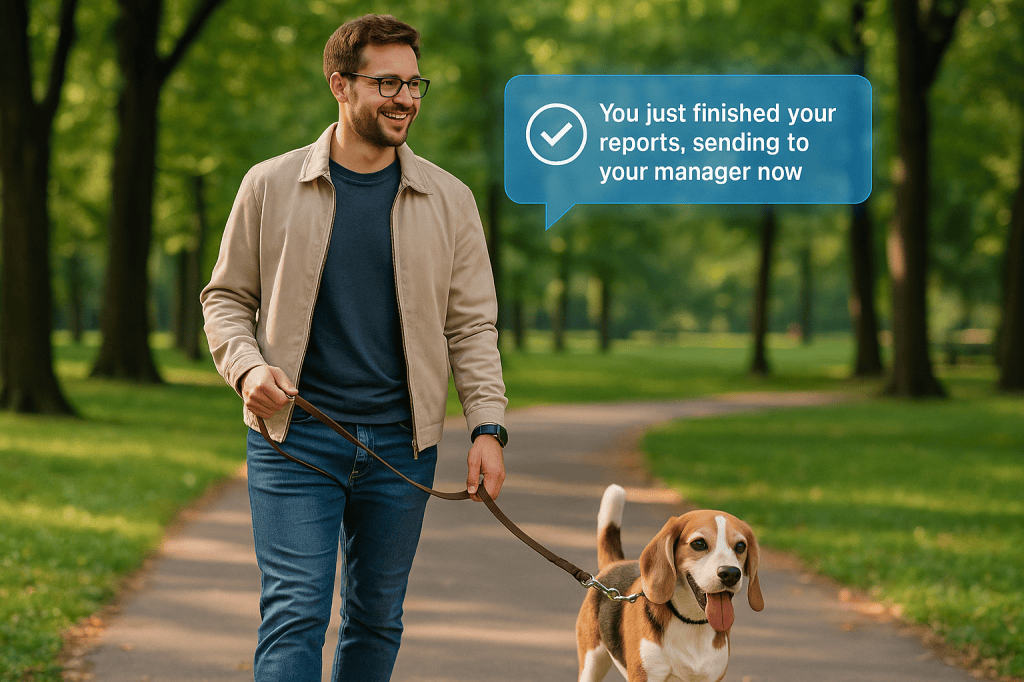
We’ve spent the past two decades optimizing ourselves into exhaustion. Inbox zero. Back-to-back Zoom calls. Every app promising “efficiency” but leaving us with more alerts, more tabs, more open loops in our heads.
And then the agents arrived.
At first, they just answered emails or scheduled meetings. Then they started handling customer service calls, reordering groceries, filling out insurance forms. One morning, I realized I hadn’t logged into my bank’s website in months. My AI had been quietly managing the small frictions I used to lose hours to.
It struck me: maybe the true promise of AI isn’t just efficiency. Maybe it’s time back. Not time for more meetings. Not time to consume more content. Time for the things that make us human.
This is the re-humanization dividend: the hours, energy, and dignity returned to us when machines take on the administrative burden of modern life.
From Optimization to Liberation
For years, the story of technology has been one of optimization. Faster workflows, leaner supply chains, smarter dashboards. Productivity graphs always tilting upward.
But that model often made people feel less human, not more. Work bled into evenings. Shopping became endless scrolling. Parenting felt like logistics management.
Delegating those burdens to agents opens a different story: not just squeezing more work into the day, but removing the work that was never meaningful to begin with.
“AI has the potential to automate drudgery,” said Erik Brynjolfsson, director of Stanford’s Digital Economy Lab. “The dividend is not just economic. It’s human — freeing people for creativity, care, and connection.”
What Time Back Looks Like
I asked friends what they’d do if agents gave them back 10 hours a week. Their answers weren’t about hustling harder.
- “I’d cook with my kids instead of ordering in.”
- “I’d start painting again.”
- “I’d call my mom.”
- “I’d sleep.”
These are not luxuries. They are the building blocks of identity, of relationships, of dignity.
Imagine a teacher who no longer spends evenings grading papers because her agent does the first pass. Or a nurse who doesn’t waste 40% of their shift on paperwork. Or a small business owner who can focus on craft instead of bookkeeping.
In trials at Massachusetts General Hospital, early AI deployments cut physician note-taking time by nearly 70%. Doctors reported not just efficiency gains, but emotional relief: “I felt like I could finally look patients in the eye again.” (NEJM AI, 2023)
That’s the re-humanization dividend in practice.
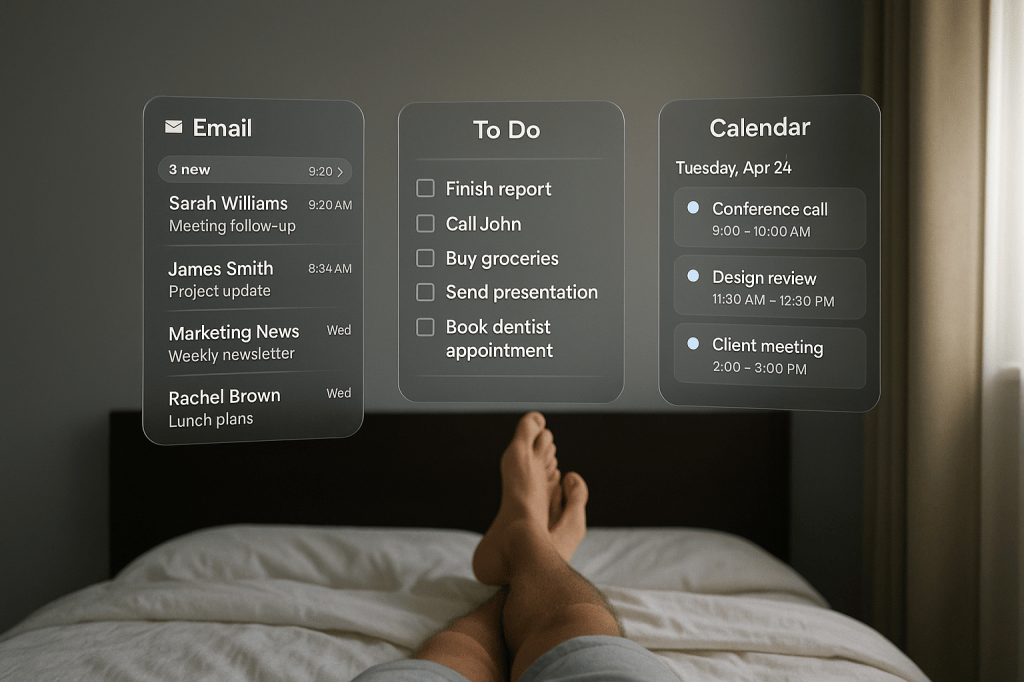
A Day Reclaimed
Picture a day in this future.
You wake up. Your agent has already triaged your inbox, highlighting only the two messages that truly need you. The rest were answered or filed away.
On your commute, you don’t scroll — you notice. The trees. The people. A thought you hadn’t had space for in months.
At work, your agent handles scheduling. It drafts the first version of a proposal, pulling in relevant data. You edit, shape, and give it a voice only you could give.
By evening, you’re not wrung out. You cook, you play, you read. You feel like a person, not a task machine.
It’s not utopia. There are still stresses, still work. But the texture of life shifts — from reacting to creating, from administrating to living.
Risks of Hollow Freedom
Of course, time back is not automatically good. It can be squandered. Or worse, it can be reabsorbed into more demands.
Already, some companies talk about AI agents as “productivity multipliers” — code for squeezing more output from fewer workers. In that scenario, the dividend doesn’t go to the human. It goes to the firm.
“We risk creating ‘productivity gains without quality of life gains,’” warns MIT economist Daron Acemoglu. “Unless we design policies and norms to return time to people, the dividend will be captured by capital.”
There’s also the danger of hollowness. If we outsource too much, do we lose a sense of agency? Does cooking matter if your AI planned the meal, ordered the groceries, and optimized the recipe?
The line between liberation and detachment will be thin.
Designing for Dignity
So how do we ensure the dividend is human, not hollow?
- Time-Back Accounting: Agents should show you where your hours were saved. Not as a productivity metric, but as a mirror: “You got 4 hours back this week. How do you want to spend them?”
- Care Quotas: Companies could measure not just outputs but human hours restored — “meeting-free Fridays,” “paperwork eliminated” — as real KPIs.
- Community Agents: Imagine neighborhood or family agents coordinating chores, meals, or rides. Time back isn’t just individual — it’s collective.
As Anne-Marie Slaughter wrote in Unfinished Business: “The most important work we do is not in the market. It’s in caring for one another.” The dividend is a chance to make that visible again.
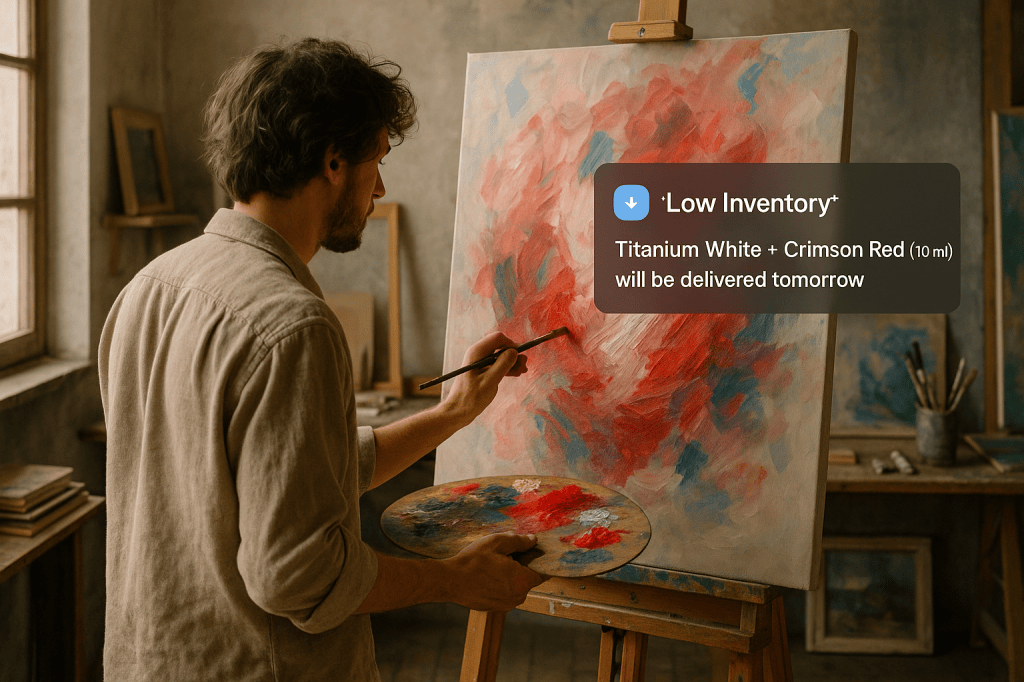
Everyday Stories of the Dividend
- The hospice nurse: “If I didn’t have to chart every note manually, I could hold more hands.”
- The father of three: “Our agent now manages bills. My wife and I fight less — we don’t argue about who forgot to pay what.”
- The artist: “I used to think I was too busy to paint. Turns out I was just buried in admin.”
These stories matter more than macroeconomics. They remind us what’s at stake isn’t just efficiency, but identity.
Policy Choices Ahead
Whether the dividend becomes widespread depends on choices beyond design.
- Labor policy: Will freed-up time be treated as a layoff risk, or as a chance to shorten workweeks?
- Education: Will schools teach kids how to use agents to get time back, or will they still measure success by rote output?
- Equity: Will only wealthy families enjoy the dividend, while others are stuck doing both the admin and the labor?
The International Labour Organization estimates that with thoughtful deployment, AI could reduce working hours globally by 10–15% without loss of output. But without guardrails, it could just deepen inequality.
A Culture Shift
Ultimately, the re-humanization dividend isn’t about AI. It’s about culture.
If we treat time back as a chance to cram in more work, we’ve missed the point. If we treat it as a chance to restore craft, care, rest, and play — then it becomes a cultural renaissance.
I keep thinking of the first evening I had nothing “urgent” left to do because my agent had already cleared it. I sat down and wrote a letter to a friend. On paper. I hadn’t done that in years.
That letter wasn’t efficient. It wasn’t optimized. It was human.
Reflections
The dividend is not guaranteed. It could be stolen by firms, wasted by habit, or hollowed by detachment.
But if we claim it, if we design for dignity, if we measure success not in clicks or KPIs but in hours returned to living — then AI could paradoxically make us more human, not less.
We don’t yet know if we’ll take that path. But maybe the right question isn’t whether agents will free us from admin. It’s what we’ll do — or not do — when they do.
Because the dividend is not just time. It’s a second chance.


Leave a Reply