

Impulse is woven into the fabric of commerce. You toss gum into your basket at the grocery checkout. You see a last-minute flight deal and book it. You grab a book in a store simply because the cover catches your eye.
But what happens when personal AI agents filter every choice before you ever see it? When algorithms prune the world down to “best matches” for your stated values and constraints? The messy, irrational spark of impulse may disappear. And with it, serendipity — the joy of stumbling onto something you never would have sought out.
The Disappearing Impulse
Psychologist Walter Mischel once framed self-control as the “marshmallow test” — the ability to delay gratification for a bigger payoff later. For decades, impulse was treated as a weakness. Marketers, of course, leaned into it. Entire industries thrived on tempting us into quick decisions.
Now, AI agents may overcorrect. They’ll guardrails us. They’ll delay or block “bad” decisions.
- “You told me to avoid discretionary purchases when your balance dips under $500.”
- “This purchase pattern resembles regretful behavior. Are you sure?”
As MIT researcher Sherry Turkle has warned, “The danger of offloading choice is that we may also offload surprise.”
Expert View: Serendipity as a Cognitive Vitamin
“Serendipity is not just fun; it’s essential to creativity and learning,” says Dr. Kate Darling, a researcher at MIT Media Lab. “When everything is optimized, you don’t encounter the unexpected — and the unexpected is what sparks growth.”
In other words: we need a little randomness. Without it, our lives risk becoming sterile optimization loops.
Design Ideas: Building Back Surprise
Some designers are already thinking about how to reintroduce serendipity into agentic systems.
- Serendipity Budgets: agents could set aside, say, 5% of recommendations for purely random suggestions.
- Constraint Fuzzing: instead of filtering only by strict criteria, agents occasionally stretch beyond them.
- Delight Debts: systems track how often they’ve surprised you, and ensure the balance doesn’t drop to zero.
“Think of it like planned randomness,” says Spotify’s former head of product Gustav Söderström. “Discovery requires friction — a song you didn’t ask for, but love. Agents must preserve that.”
Everyday Losses
Imagine three ordinary lives without impulse:
- The teen who never wanders into a record shop, because their agent streams only what matches past preferences.
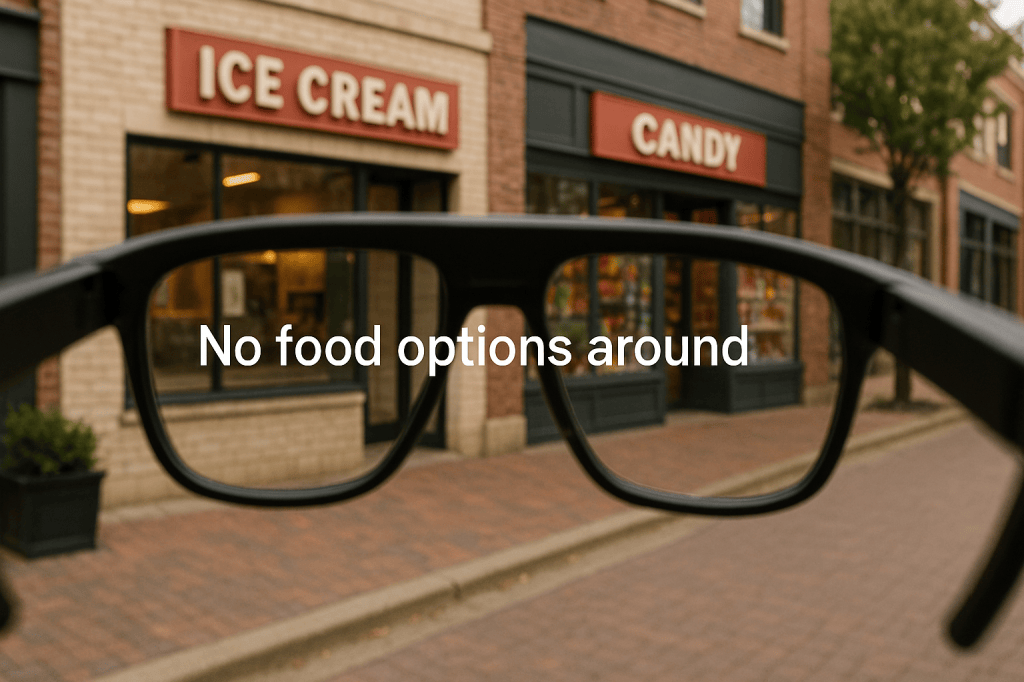
- The traveler who never finds a tucked-away restaurant, because their agent filters only highly-rated options nearby.
- The parent who never grabs a silly toy for their child on a whim, because their grocery order is locked into optimized constraints.
None of these are catastrophic. But together, they make life less textured.
The Risk of Flattened Culture
Impulse doesn’t just drive consumer regret — it drives cultural diversity. Bookstores survive on impulse browsing. Indie brands rely on unexpected discovery. If agents collapse demand into perfectly optimized funnels, whole ecosystems may disappear.
A 2024 report from the World Economic Forum warned: “Algorithmic filtering risks homogenizing culture, reducing exposure to diverse ideas and products.”
That flattening isn’t just an economic risk — it’s a civic one. Serendipity sustains pluralism.
Counterpoint: Maybe It’s Relief
Not everyone mourns the loss of impulse. Behavioral economist Richard Thaler argues that “choice architecture” — nudges that help people make better decisions — can be empowering.
“If AI prevents regret,” he told The Financial Times, “that’s not infantilizing. That’s liberating.”
The coffee you don’t overpay for. The gadget you don’t impulse-buy and regret. The diet you actually stick to. For many, a little less impulse may feel like a healthier life.
Regulation and Guardrails
Should serendipity be a right? Unlikely. But regulators are beginning to notice the risks of over-personalization.
- The EU AI Act requires “human oversight” in consumer decision systems.
- The UK’s CMA has flagged personalization that reduces consumer choice as a competition concern.
- U.S. policy circles are debating whether algorithmic transparency should include “exposure diversity metrics.”
These are early steps. But they show recognition that pure optimization may not serve the public good.
Looking Ahead
Impulse is irrational. Serendipity is inefficient. But both are deeply human.
If our agents protect us too well, we may never stumble across the book that changes our mind, the flavor we didn’t know we’d love, or the wrong turn that leads to something wonderful.
Maybe the question isn’t “Should agents suppress impulse?” but “How much serendipity should we demand back?”
Because if the future is only optimized, we may find it’s also unbearably flat.


Leave a Reply