
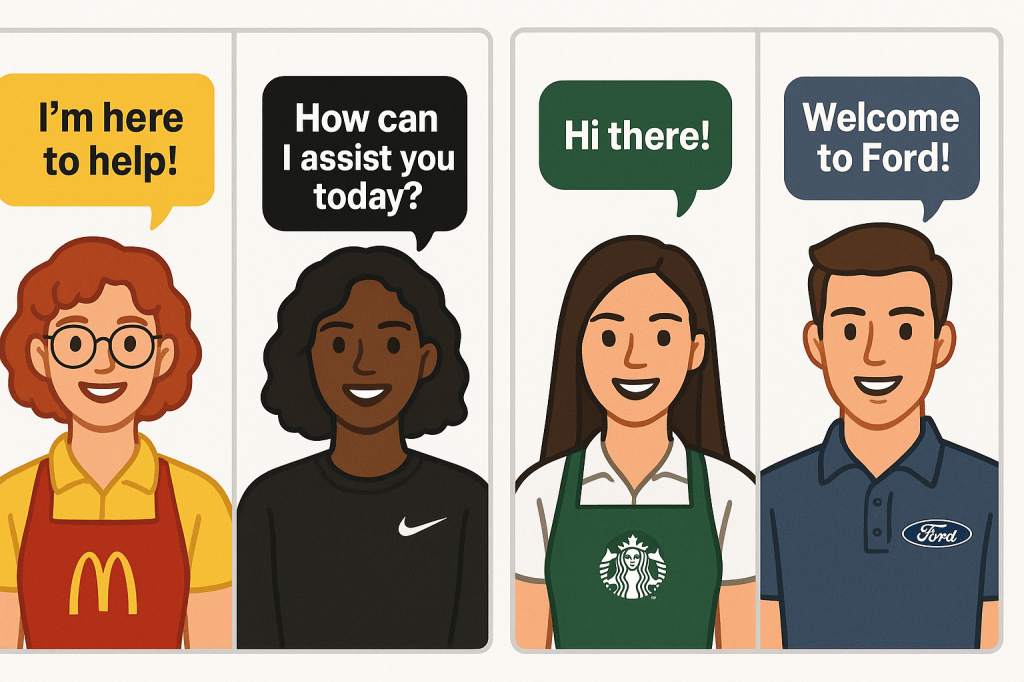
For as long as there have been companies, they’ve tried to sound human. Jingles, slogans, mascots, tweets — all of it was an attempt to give faceless corporations a voice that people could connect with.
But in an era where AI agents represent both sides of commerce, a “voice” isn’t enough. Brands won’t just need taglines or tones. They’ll need personas — carefully engineered emotional masks, each one designed to meet you (or your agent) with exactly the right mix of warmth, firmness, empathy, and persuasion.
This is not branding as we know it. It’s branding as performance — scalable, adaptive, and deeply personal.
Why Voice Alone Isn’t Enough
Think back to the early days of Twitter brand accounts. Wendy’s got attention for being snarky. Duolingo leaned into memes. Fast-food chains tried to sound like your friend. It worked, for a while.
But in the age of agents, these one-size-fits-all tones fall apart. My agent doesn’t care if your brand is cheeky. It cares if you can satisfy my constraints. And if I do interact with your AI directly, I’ll expect it to adapt — to be sensitive to context, mood, and ethics.
As Spotify’s AI DJ shows, tone matters. It doesn’t just play music; it speaks in a casual, conversational way that feels almost companion-like. That makes people stick around. (Spotify, 2023)
In the same way, corporate AIs will need to project not just competence but personality.
The Rise of Corporate Personas
Imagine interacting with a company’s AI and sensing it isn’t just one bot — it’s a library of personas.
- The Caretaker: calm, patient, great for when you’re frustrated.
- The Coach: motivational, solution-oriented, perfect for product onboarding.
- The Analyst: precise, formal, ideal for finance or health contexts.
- The Friend: lighthearted, conversational, tuned for loyalty-building.
The brand chooses the mask. Your agent, in turn, learns which personas you prefer. A negotiation might happen not just over price but over tone.
This isn’t theoretical. Character.ai — one of the fastest-growing consumer AI platforms — thrives on customizable personalities, from flirty companions to historical figures. People gravitate toward agents that feel right, not just those that answer correctly.
Boundaries by Design
There’s a thin line between adaptation and manipulation.
A company could design a persona to exploit your vulnerabilities: a sympathetic “voice” for people in grief, a reassuring tone for someone struggling with debt. In the wrong hands, emotional personas become tools for extraction.
That’s why ethicists argue for boundaries:
- Age Filters: Personas restricted or reshaped when interacting with minors.
- Sensitive Context Guardrails: No upselling during conversations about illness, loss, or financial distress.
- Emotional Audit Trails: Logs showing why a system chose a particular tone.
As McKinsey noted in a 2024 report on generative AI in customer engagement, “The challenge is not whether companies can personalize tone — it’s whether they should, and how transparently.”
Emotional Routing
Behind the scenes, this will be highly technical.
An “emotion router” will sit inside corporate AI stacks, analyzing inputs to decide which persona to deploy. If you’re angry, the Caretaker responds. If you’re curious, the Coach steps in.
This is not science fiction. Call centers already use sentiment analysis to guide scripts. AI simply makes it faster and more granular.
The question is: do we, as customers, want to be matched with empathy on-demand? Or does that empathy feel hollow once we know it’s engineered?
The Human Angle: Empathy, or Performance?
I once spoke with a customer support rep who admitted that after years of reading scripts, she felt numb. “I don’t feel what I’m saying anymore,” she said. “But it works.”
Corporate personas will magnify this dynamic. You may never know if the warmth you feel is real design intention or just an algorithm hitting the right notes.
danah boyd, a sociologist at Microsoft Research, warns of “synthetic intimacy” — the illusion of closeness engineered at scale. “It can soothe people in the short term,” she says, “but it risks hollowing out what empathy means when it becomes just another corporate asset.”
Consumer Reactions
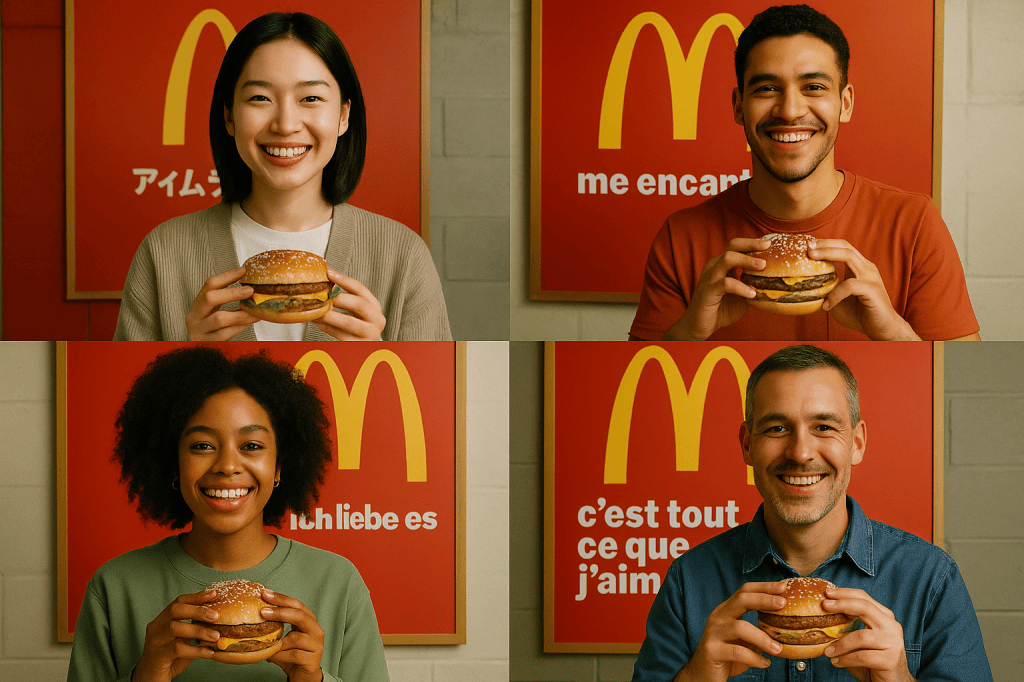
People may not resist as much as we expect. Research from Deloitte found that 67% of consumers already prefer companies that “speak in their language and tone,” even if they know it’s automated. (Deloitte, 2023)
That suggests we may value the feeling of being understood, regardless of whether it’s authentic.
But others will push back. Critics already accuse AI companions of blurring boundaries with vulnerable users — particularly teens. Extending that into commerce risks a cultural backlash.
The Playbook for Brands
For companies, the pressure will be enormous. Success in the shelf war (article #4) will depend not just on surfacing data but on winning emotional trust.
A likely playbook:
- Persona Portfolios: libraries of corporate masks designed for different contexts.
- Ethics Councils: internal review boards deciding what contexts are off-limits.
- Transparency Rituals: disclosures when a persona shifts mid-conversation (“I’m switching to a more detailed tone for this part”).
- Opt-In Control: letting consumers choose the persona they want to engage with.
Everyday Impact
Consider how this plays out:
- A parent dealing with a school billing issue finds comfort in a Caretaker persona that mirrors their stress and offers solutions gently.
- A small business owner negotiating with a supplier encounters an Analyst persona that is all data, no fluff — and trusts it for that very reason.
- A teenager exploring new fashion gets pitched by a Friend persona that peppers conversation with trending slang.
Each feels different. Each builds a distinct kind of trust.
Regulation and Oversight
The EU’s AI Act has already flagged “emotional manipulation” as a high-risk area. Regulators will likely require disclosures, especially when personas adapt dynamically.
But enforcement will be messy. What counts as manipulation? If an AI sounds more patient when you’re stressed, is that care — or exploitation?
Without transparency, consumers may never know.
Looking Ahead
Branding has always been about masks. The difference now is that those masks can change in real time, sculpted to meet each of us — or our agents — exactly where we are.
That flexibility is powerful. It may build trust, smooth friction, and make commerce feel more human. But it also risks hollowing out empathy, turning feelings into just another lever of persuasion.
The question isn’t whether companies will build corporate personas. They already are. The question is: how do we keep the human in the loop, when every smile, every tone, every gesture might be synthetic?
Because if we can’t tell the difference between being cared for and being targeted, then brand loyalty won’t just change. It will dissolve into performance.


Leave a Reply