
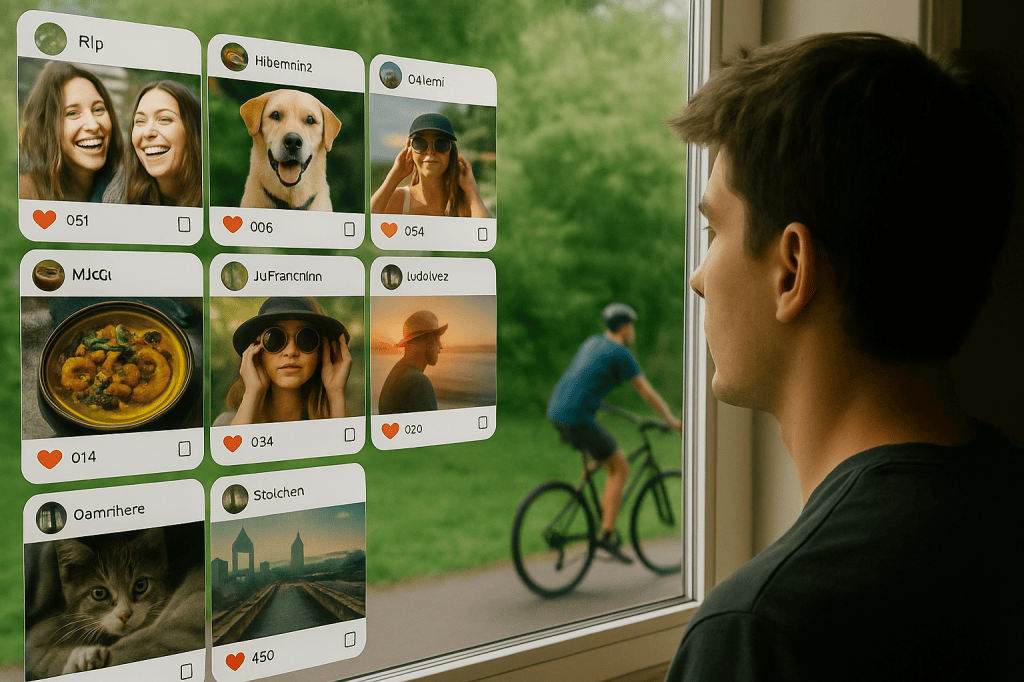
At first glance, the internet looks overcrowded. Every corner overflows with blogs, videos, memes, product reviews, newsletters, podcasts, TikToks, and AI summaries of all of the above. Content has never been more abundant — or more repetitive.
That abundance hides a paradox. For the first time in decades, we’re heading into a content shortage. Not of words or images, but of originality. As AI systems scrape and remix existing material, what becomes rare is the thing only humans can produce: lived experience, firsthand reporting, authentic perspective.
This shortage is both a cultural and a business story. For culture, it could be a correction — a renewed hunger for what feels real. For businesses, it’s a strategic shift — a new battle for visibility in an economy where AI agents decide what’s worth showing.
Why the Web Feels the Same
You don’t need a study to feel it. Recipes blur together. Reviews repeat clichés. Articles exist not to be read, but to hit keywords. Scroll long enough and it feels like the same meal reheated a hundred times.
AI supercharges this sameness. Large language models are extraordinary at recombining what’s already out there — but without fresh data or firsthand input, they spin in circles. They’re remixers, not reporters.
As journalist Charlie Warzel put it in The Atlantic: “The internet has never been more crowded, but it has rarely felt so empty.”
When everything is an echo, the human voice starts to stand out again.
Lived Experience as Currency
That’s why originality is poised to become the new scarcity.
- Original reporting: stories grounded in facts someone actually went out and gathered.
- Personal narratives: messy, specific, vulnerable experiences that resist automation.
- Local knowledge: insights rooted in particular communities and places.
These aren’t just nice-to-haves. They’re the only inputs that can refresh the pool of knowledge AI draws from. Without them, the loop gets stale.
The irony is sharp: the more synthetic content floods the web, the more valuable the human edge becomes.
What Businesses Need to Do
For companies, the content shortage flips strategy upside down.
Search once rewarded abundance. AI answers reward authority. If you don’t produce unique data or knowledge, you risk being invisible inside the agent economy.
That’s why publishers are signing licensing deals with OpenAI and Google — not just for cash, but for visibility. News Corp’s partnership with OpenAI in 2024 was framed as journalism, but its subtext was survival: keep our reporting in the training mix, or vanish from AI answers altogether.
SEO firm BrightEdge estimated that businesses depending on commodity content could lose 30–40% of their organic traffic as AI overviews replace clicks. The implication is clear: derivative content won’t just underperform — it may not show up at all.
Scarcity Portfolios
The businesses that thrive will treat content as an asset class. That means building what competitors can’t:
- Proprietary datasets (customer research, field testing, performance data).
- Proof-of-work content (behind-the-scenes, expert demonstrations, original analysis).
- Provenance and trust labels (so agents know what’s real and can cite it).
As analyst Benedict Evans put it: “The value isn’t in producing more. It’s in producing what others can’t.”
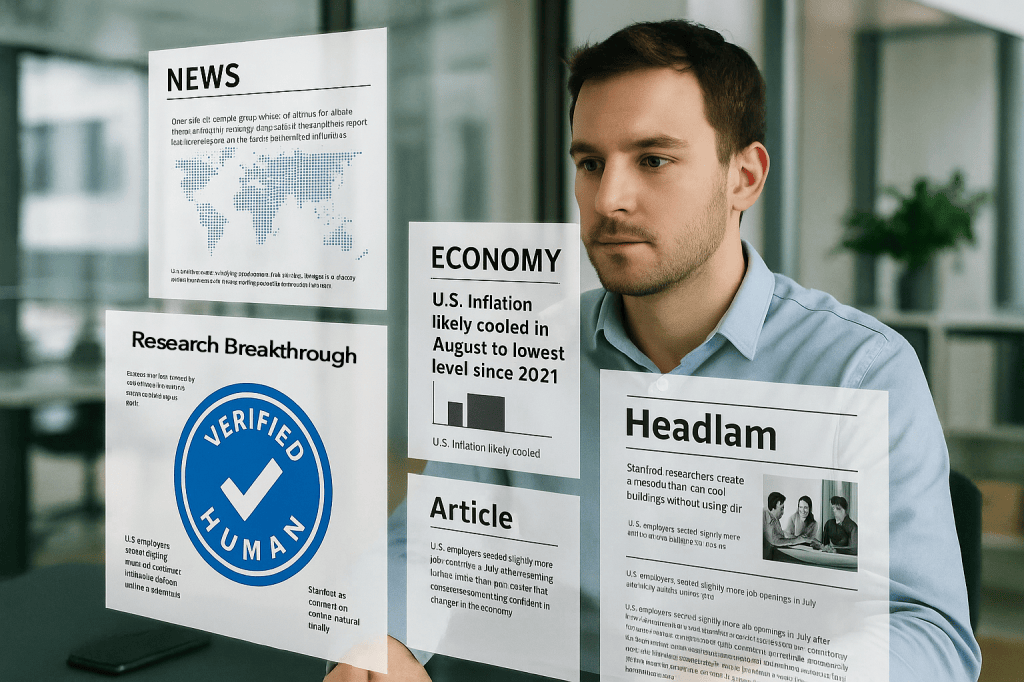
Cultural Impact: Re-Valuing the Human
For culture, the shortage has a silver lining.
Maybe we start to treasure the jagged, specific, unpolished again. A photo essay from a small-town paper. A diaristic blog about grief. A podcast recorded around a kitchen table.
AI may flood us with competent prose, but competence isn’t the same as resonance. The hunger will grow for writing and art that feels lived, not generated. For provenance you can trust. For voices that surprise instead of summarize.
In other words: a reset.
As one editor told Nieman Lab: “The only way to cut through the flood is to be more human, not less.”
The Optimistic Spin
This shortage isn’t a crisis — it’s a recalibration.
For culture, it pushes us to rediscover value in originality, vulnerability, and local knowledge.
For businesses, it forces a pivot away from scale-for-scale’s-sake, toward scarcity strategies that build real advantage.
And for individuals, it may mean that in a sea of synthetic sameness, the rare, authentic story stands out brighter than ever.
Maybe the internet of the 2030s looks less like an infinite warehouse and more like a farmer’s market: smaller, slower, each stall labeled with provenance. Still noisy, but with more signal worth noticing.
Looking Forward
The great content shortage won’t mean less information. It will mean a deeper hunger for what feels alive.
For companies, the winners will be those who invest in producing what can’t be copied. For creators, the opportunity is to lean into the specific, the messy, the personal. For all of us, it’s a reminder that abundance isn’t the same as richness.
And maybe, just maybe, that shortage will be a gift — forcing us to slow down, pay attention, and rediscover what was always most valuable in the first place: the human voice.


Leave a Reply