
Loyalty used to be simple. You carried a card in your wallet. You collected points. Maybe you got a free coffee after ten visits, or a flight upgrade after a dozen trips. It was transactional, but also emotional: the small thrill of being recognized as a “regular.”
But loyalty in the age of agents looks very different. Your personal AI doesn’t care about free lattes. It doesn’t feel nostalgia for a brand. It cares about constraints: price, sustainability, convenience, values you’ve encoded. It makes decisions for you, often before you even see the options.
Which means loyalty itself is being rewritten — not as a relationship between consumer and company, but as a relationship between agents.
A Day in the Life of New Loyalty
Consider the Alvarez family. Two working parents, one child, busy schedules. They used to juggle multiple loyalty programs: a grocery app, a pharmacy card, a travel rewards credit card.
Now, their household AI manages everything.
- It knows their weekly grocery needs, compares agents from different stores, and negotiates bundles.
- It tracks health purchases and flags when vitamins are running low.
- It books travel, automatically factoring in accumulated points across airlines.
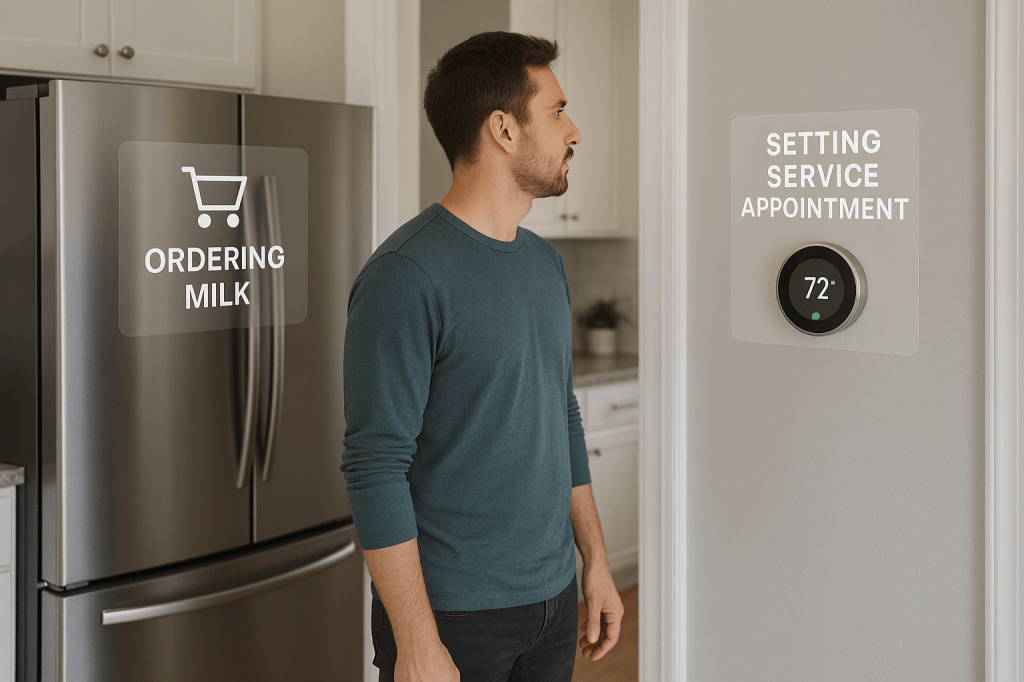
What’s interesting is what they don’t do: they don’t log into loyalty portals, don’t track points, don’t browse ads. Their AI tallies everything silently, only surfacing relevant options when it matters.
Loyalty is no longer a consumer pastime. It’s infrastructure.
Expert View: Loyalty Becomes Invisible
“Loyalty has always been a data exchange,” says Forrester analyst Sucharita Kodali. “What’s changing is that the exchange is now machine-to-machine. Customers may never even know what brand partnerships are being activated on their behalf.”
Kodali’s point is key: loyalty may become invisible to consumers. Agents accumulate and spend points without fanfare. The “emotional frosting” of traditional loyalty programs may melt away.
Reciprocal Memory
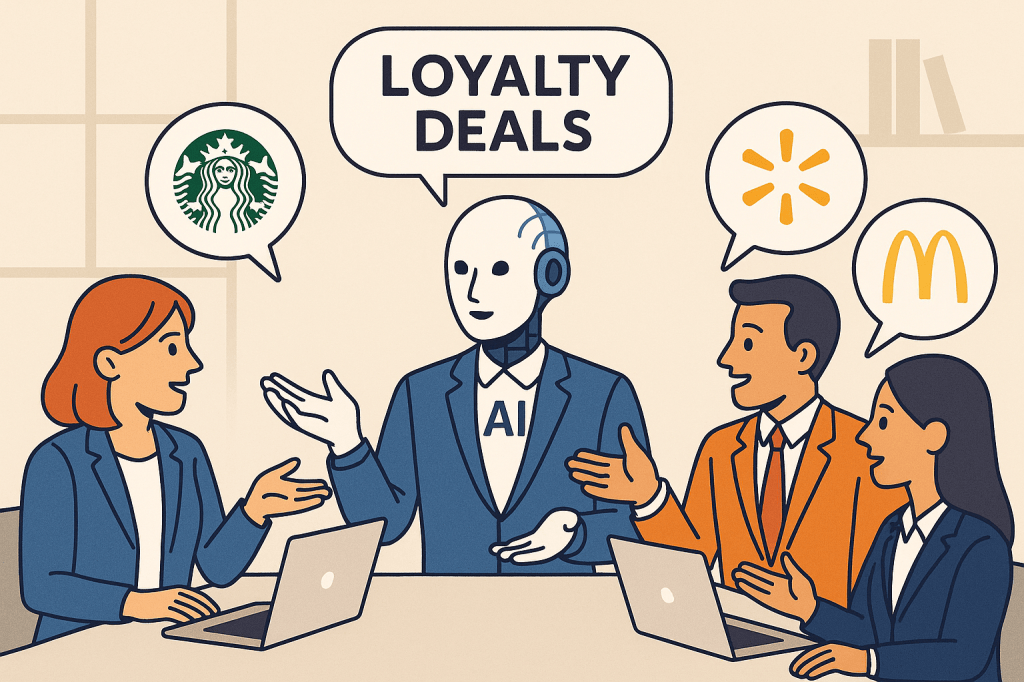
One possibility is reciprocal memory: when your agent and a brand’s agent build history together.
- Your agent remembers that the pharmacy AI always offers proactive discounts for recurring prescriptions.
- The pharmacy’s AI remembers that you always choose the eco-friendly option when available.
Over time, these patterns build trust — not between you and the company directly, but between two systems acting on your behalf.
It’s a strange kind of loyalty: not sentimental, but procedural.
Loyalty Beyond Discounts
Experts argue this could expand loyalty into new dimensions:
- Values-based loyalty: your agent may favor brands aligned with your ethics (sustainability, labor practices).
- Coalition loyalty 2.0: agents may bundle cross-industry deals automatically — your grocery points translating into ride-share credits, negotiated bot-to-bot.
- Service loyalty: loyalty may not be to the product, but to the smoothness of the agent interaction.
As McKinsey put it in a 2024 report: “In an agentic economy, loyalty becomes less about discounts and more about trust in machine-mediated consistency.”
Everyday Risks
But what about the risks?
- Opacity: if your agent is trading points or favors in the background, you may not know what deals you’re benefiting from — or missing.
- Manipulation: brand agents could privilege partnerships that serve their parent company, not you.
- Homogenization: if agents optimize loyalty across conglomerates, independent brands may get squeezed out.
Abeba Birhane, an AI ethicist, warns: “Loyalty risks becoming another word for lock-in. If your agent defaults to one ecosystem, you may never even see alternatives.”
Optimism in the Details
Still, there’s room for optimism if we design loyalty systems with people in mind.
- Transparent summaries: your agent should explain why it chose a particular store or service, including loyalty factors.
- Customizable values: you should be able to tell your agent, “Prioritize ethical sourcing over maximum discount.”
- Revocable defaults: loyalty shouldn’t mean lock-in; you should be able to reset the relationship with one command.
Done right, loyalty could shift from gimmicky points to meaningful alignment.
Everyday Ripples
For families like the Alvarezes, this means:
- Less mental clutter tracking coupons and apps.
- More consistent value from purchases.
- Greater ability to align spending with their actual values.
For small businesses, it could mean:
- New opportunities to plug into coalition networks.
- A chance to compete on values and service, not just raw spend.
- But also pressure to integrate into agent ecosystems or risk invisibility.
Reflections
Loyalty is being redefined. No more plastic cards. No more dashboards of points. Instead, invisible negotiations between agents, trading not just on discounts but on memory, trust, and values.
We don’t know exactly how it will play out. Some people may miss the gamified thrill of chasing points. Some companies may try to manipulate the system for lock-in.
But there’s a hopeful path: loyalty that actually reflects what matters to us — not as slogans, but as encoded choices in the systems that shop, negotiate, and decide on our behalf.
If we get it right, loyalty may not disappear. It may finally become something worth having.


Leave a Reply