We used to have a ritual. When we needed something — a new pair of headphones, a recipe for dinner, a review of a hotel — we opened a browser and typed. The little box at the center of the screen was the front door to the internet. Google rewarded the companies that knew how to climb its rankings. Entire industries grew up around those keywords.
But something has shifted. Increasingly, when we ask a question, we don’t get ten blue links. We get an answer. Google calls them “AI Overviews.” Microsoft calls it Copilot. ChatGPT gives a conversational summary. Whatever the branding, the point is the same: we no longer sift through websites. We receive a distilled conclusion.
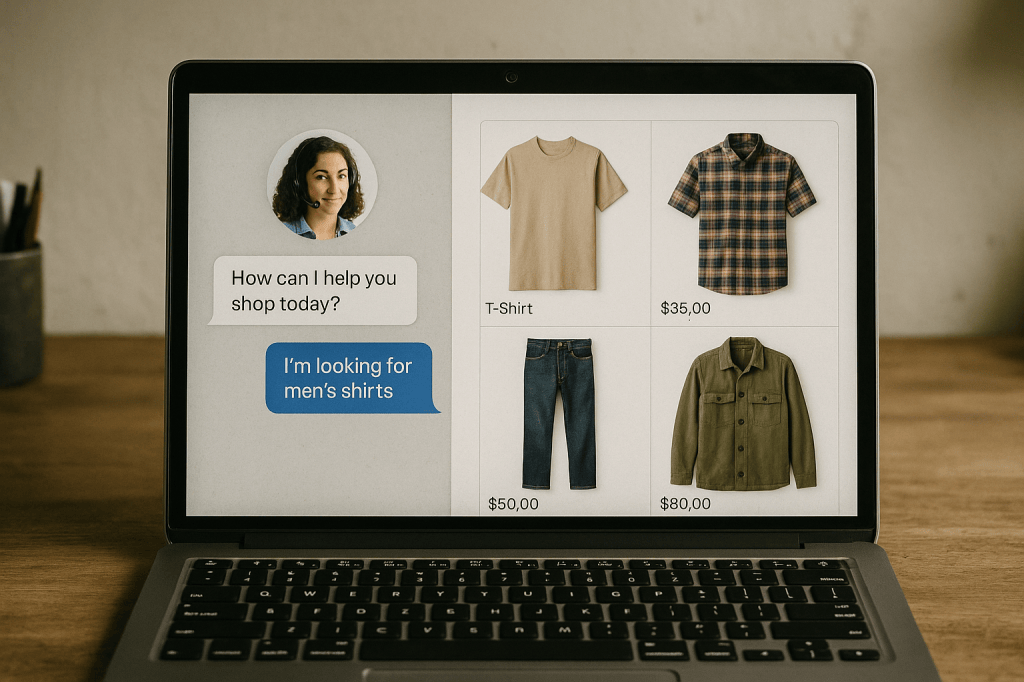
And if we’re already starting to trust those summaries — if we click less and less — imagine what happens when our personal AI agent does the asking on our behalf. We won’t even see the sources. Our agents will simply weigh the competing claims and tell us, “Here’s the best option.”
The front door has moved. It’s no longer search engine optimization (SEO). It’s answer engine optimization (AEO) — structuring information not for human eyes but for machine interpreters.
From Clicks to Conversations
For twenty years, SEO was gospel. Businesses stuffed pages with keywords, built backlink networks, and obsessed over Google’s ever-shifting algorithm. The prize was traffic: millions of humans funneled to your site.
But in an era of AI-generated answers, traffic isn’t the metric. Visibility to agents is.
Take Google’s AI Overviews, rolled out in 2024. For many queries, the top of the page now shows a generated response summarizing multiple sources. Traffic to the underlying sites often plummets. The SEO firm BrightEdge estimated that in some categories, websites saw 20–40% fewer clicks within months of Overviews launching. “It’s a massive upheaval,” said Jim Yu, BrightEdge’s founder.
Microsoft, meanwhile, integrated Copilot into Bing and Windows, encouraging users to ask conversational questions rather than type keywords. And OpenAI’s partnerships with companies like Reddit and News Corp are explicitly about licensing data so ChatGPT can produce more authoritative answers. (Reuters)
The battle is no longer for a human’s attention span on page one of Google. It’s for a machine’s trust in citing you.
What “Optimization” Means Now
So what does AEO look like in practice? It’s not about cramming in keywords. It’s about becoming machine-legible:
- Structured Data: Content marked with schema.org tags, product feeds, or machine-readable formats that AI systems can parse.
- Citation-Friendly Phrasing: Clear, concise statements of fact that a model can easily lift into an answer.
- Entity Authority: Building credibility not just with humans but with AI engines that weigh who you are and how trustworthy your data appears.
In this world, websites start to look less like glossy brochures and more like training data pipelines. Your audience isn’t just a shopper in a browser. It’s the language model serving that shopper.
As one marketing strategist put it: “If SEO was about showing up in front of humans, AEO is about showing up inside the machine’s brain.”
The Disappearing Brand
That shift raises unsettling questions about brands.
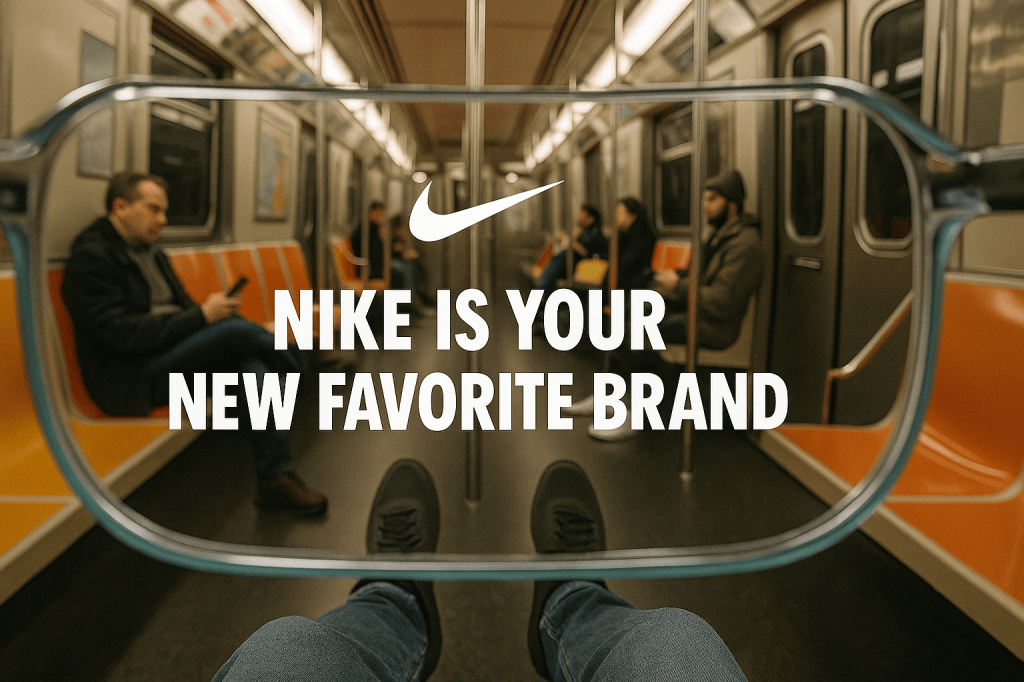
For decades, companies spent billions on logos, slogans, celebrity endorsements — signals meant to lodge in human memory. But if my personal agent is doing the searching, it doesn’t care about a jingle. It cares about constraints: price, ethics, quality, fit.
A recent PwC survey found that 73% of business leaders believe AI agents will significantly alter consumer loyalty, with brand recognition dropping in importance compared to objective performance. (PwC)
The challenge is clear: in an answer-first world, your brand may only survive if it’s embedded in the right dataset, structured the right way, and trusted by the right models.
The New Gatekeepers
This raises a bigger issue: who decides which sources get surfaced?
When I asked ChatGPT for “best compact SUVs under $30k,” it cited Consumer Reports, U.S. News, and Edmunds. But it didn’t show me every site. It made a judgment call about authority.
Now imagine when it’s not me asking but my agent. My world narrows to whatever it sees as authoritative. A few players — Google, OpenAI, Anthropic, Meta — will effectively decide which sources are encoded as trustworthy. That concentrates immense power.
“We’re creating new gatekeepers,” said Tim Wu, Columbia law professor and former White House advisor. “Instead of publishers fighting for attention, they’re fighting to be legible to machines. And the machines are owned by a handful of companies.”
The Small Business Dilemma
This is especially dangerous for small businesses.
A boutique coffee roaster used to be able to build an SEO-optimized blog, climb the rankings, and earn customers. In an AEO world, unless that roaster’s data is in the right structured format and picked up by the right engines, it may never appear in a consumer’s field of vision.
Already, publishers are sounding alarms. The Wall Street Journal reported that some smaller sites saw traffic crater after Google’s AI Overviews launched. Without visibility, their ad revenue and sales pipeline dry up.
AEO, then, isn’t just a technical challenge. It’s an existential one for the long tail of the internet.
How Businesses Are Responding
Forward-looking companies are already adapting:
- Retail giants like Walmart are feeding structured product data directly into AI systems.
- Media companies are striking licensing deals with OpenAI and Google, ensuring their content is included and cited.
- Startups are specializing in “AI visibility,” helping brands restructure websites and feeds for machine digestion.
There’s even a new job title emerging: Answer Strategist. Half technical SEO expert, half data engineer, half brand translator. Their job is to make sure a company’s facts are framed so AI agents surface them correctly.
Trust and Hallucination
Of course, there’s a catch.
AI doesn’t always get it right. Models hallucinate, cite the wrong source, or misrepresent the data. In one infamous case, Google’s AI Overview confidently told users they could add glue to pizza sauce to keep cheese from sliding off — citing a joke post from Reddit. (The Verge)
When brands are surfaced incorrectly — or not at all — the stakes are high. If your product is left out of an agent’s shortlist, you’ve effectively been erased. If your facts are distorted, you face reputational damage without even knowing it happened.
That’s why some analysts argue transparency will be the next frontier: logs that show where an answer came from, why a source was chosen, and how the system weighed its trustworthiness.
The Human Angle
I’ve been experimenting with this in my own work. When I ask my AI assistant for book recommendations, I don’t get a sprawling list anymore. I get a tight, curated set — often two or three titles. And I’ve noticed I rarely question it. I just pick one.
That’s the scary part. When we humans see ten links, we feel like we’re choosing. When we see one answer, we often accept it. When our agents see hundreds of options and show us only one, we may not even realize what’s been left out.
Choice itself becomes invisible.
Regulation and the Future
Lawmakers are starting to notice. The European Union’s AI Act includes provisions requiring transparency in general-purpose AI systems. U.S. regulators like the FTC are scrutinizing how companies present AI-generated answers, especially when ads are blended into them.
But policy always lags culture. By the time the rules solidify, consumers may already have normalized trusting their agents implicitly.
Reflections
SEO built the modern internet. Entire businesses rose and fell on the ability to climb Google’s rankings. But that game is ending. The new front door is AEO — being recognized by machines as authoritative enough to be the answer.
That may sound technical, but it’s deeply human. Because what we see — and what we never even know we’re missing — will increasingly be decided by systems we don’t fully understand.
For businesses, the task is urgent: become legible to the machines, or disappear. For individuals, the challenge is more personal: remember that even if the answer comes wrapped in confidence, it is still just one lens on reality.
The future of choice is narrowing. And if we’re not careful, we may wake up one morning, ask a question, and never realize how many answers were left behind.


Leave a Reply