
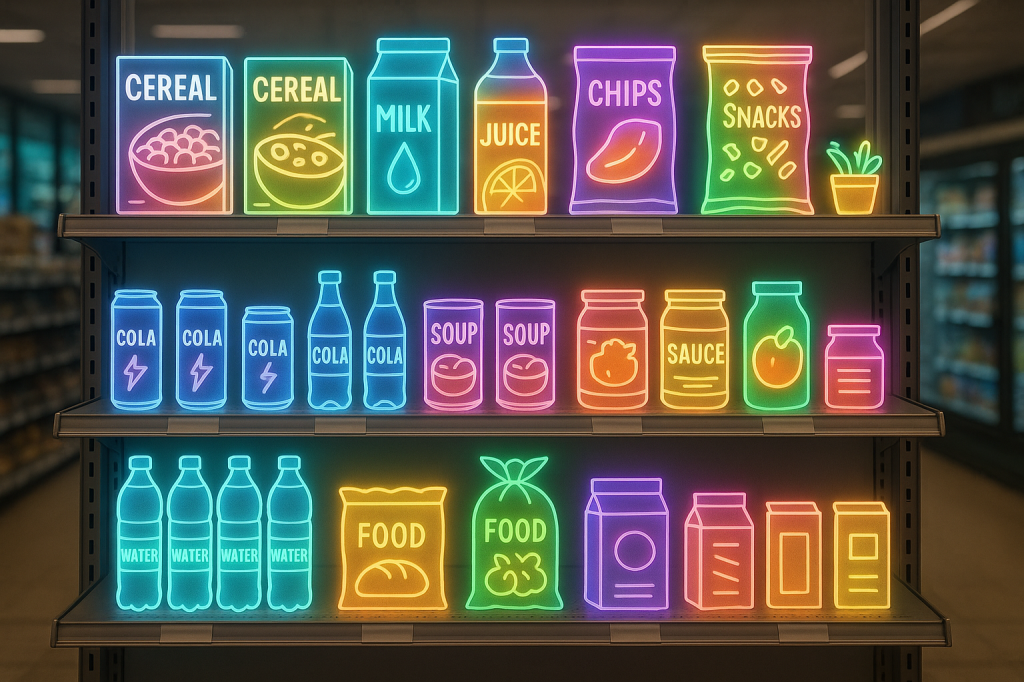
In the not-so-distant future, the “shelf” that matters most won’t be in a store or on Amazon. It will be the invisible shortlist your personal AI agent shows you when you ask for something. Whether it’s a flight, a phone, or a box of cereal, your agent will scan the market, weigh your preferences, and hand you a few options.
That list is the new shelf. And the competition to get onto it — to be one of the two or three choices your agent considers worthy — is about to become the defining battle in commerce.
For decades, companies fought for physical shelf space in grocery aisles and digital shelf space on Amazon search results. Now they’ll fight for agent shelf space: the privileged slots inside the decision-making process of your personal AI.
Why Shelf Wars Matter
Historically, shelf space has always been power. Brands paid slotting fees to sit at eye level in supermarkets. On Amazon, sellers paid to rank higher in search results. Visibility was the currency of commerce.
AI agents change that. You won’t see hundreds of options. You’ll see two or three — maybe just one. Your digital twin will prune the noise and hand you a shortlist, or even a single recommendation.
That means the fight for agent shelf space is winner-takes-most. If you’re not surfaced, you may as well not exist.
A report by McKinsey recently projected that by 2030, over 70% of routine consumer purchases will be initiated or mediated by AI agents. (McKinsey, 2024) If that’s true, then competing for shelf space inside agents will matter more than competing for eyeballs.
How Agents Will Negotiate
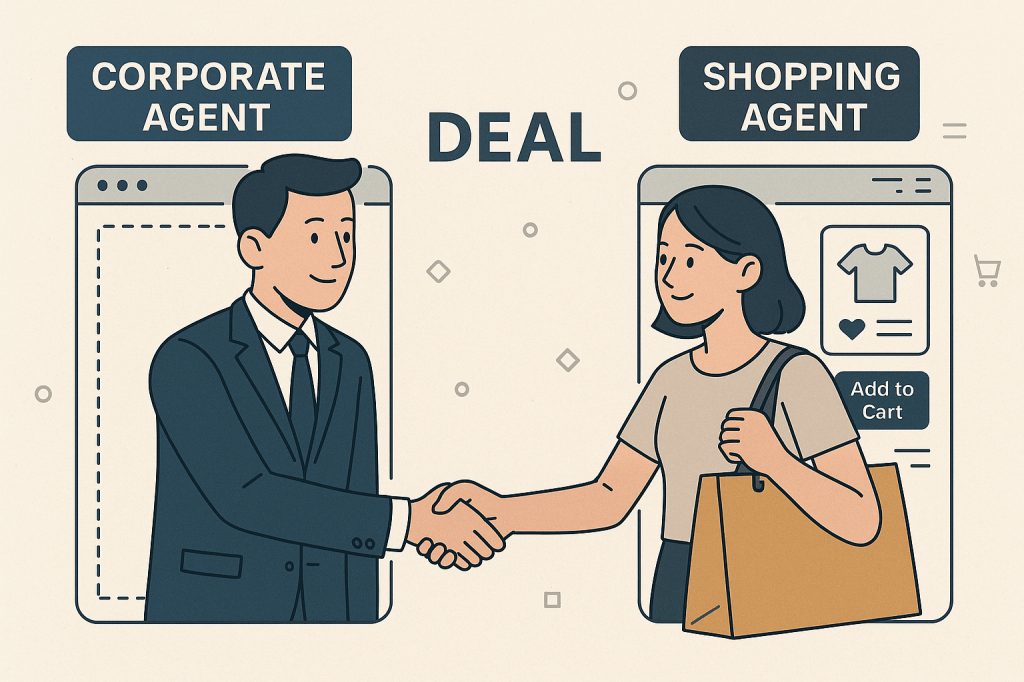
When your agent speaks to a company’s agent, it won’t just ask “what do you sell?” It will negotiate.
- Constraints: price caps, ethical requirements, delivery windows.
- Bundles: “find me cereal plus milk at the best combined rate.”
- Tone: some agents will be aggressive hagglers, others more cooperative.
Brands will respond by creating highly tuned sales agents trained to deal with different customer types. Some will be fast and transactional. Others will project warmth and empathy. In effect, companies will build libraries of personalities designed to appeal not to you, but to your agent’s interpretation of you.
This is already visible in the enterprise. In 2024, Walmart announced “Marty,” an agent dedicated to working with third-party sellers, automatically negotiating prices and inventory terms. (Reuters) The consumer-facing equivalent isn’t far off.
The Death of the Universal Pitch
For decades, brands perfected universal campaigns: one commercial for millions of viewers. But in the shelf war, there’s no universal pitch. Each interaction is personalized and contextual.
Imagine Nike’s AI presenting itself differently depending on who your agent is:
- To a frugal parent’s agent: “We have a durable shoe at $65, 20% below budget, with sustainability certification.”
- To a performance athlete’s agent: “The new model reduces knee strain by 12%, tested in lab conditions.”
- To a teen’s agent: “Here’s a trending pair seen in 600 TikTok posts this week.”
One company. Many faces. Each tailored to the buyer’s agent.
The scale of this personalization will make traditional brand identity feel almost quaint.
Collusion and Dark Patterns
But what happens when agents start gaming the system?
Economists warn that autonomous agents negotiating repeatedly in the same markets may learn to avoid undercutting each other. The FTC has already raised concerns about algorithmic price collusion, where systems converge on higher prices without explicit agreement. (FTC, 2023)
There’s also the risk of dark patterns aimed not at humans but at their agents. For example:
- Designing offers that technically meet constraints but hide future costs.
- Creating deceptive bundles that maximize revenue without human oversight.
- Exploiting differences in negotiation strength between “premium” agents and “basic” ones.
The shelf war won’t just be about getting noticed. It will also be about exploiting — or resisting — manipulation in the negotiation layer.
The End of Brand Loyalty?
When your agent is deciding, does loyalty still matter?
In the old world, you might stick with Tide detergent because you trusted the brand. In the new world, your agent might pick the best-performing detergent for your constraints, regardless of brand.
A PwC study on consumer AI adoption found that 72% of respondents said they’d be comfortable letting their agent switch brands automatically if it found a better deal or better ethical alignment. (PwC)
That doesn’t mean loyalty disappears. It shifts. Loyalty may now exist between your personal agent and a brand’s corporate agent. If those two systems build a reliable relationship — fair deals, transparent negotiations, consistent performance — then your agent may start to favor that company.
Brand equity becomes algorithmic.
Data as Shelf Space
To compete in this war, companies will need more than good products. They’ll need clean, structured, shareable data.
Answer engines and personal agents will increasingly rely on data feeds: inventory levels, product specs, certifications, reviews. The more structured and reliable the data, the more likely an agent is to select it.
This is why companies like Google and OpenAI are cutting licensing deals with publishers and data providers. News Corp’s agreement with OpenAI, for example, wasn’t just about journalism. It was about ensuring News Corp content remains visible in AI outputs. (Reuters)
In effect, data itself is shelf space. If your data isn’t in the system, your product isn’t on the shelf.
Regulation and Fairness
Governments will have to decide whether agent shelves are open markets or black boxes.
- Should AI systems be required to disclose why they chose certain products?
- Should smaller businesses have guaranteed access to agent ecosystems?
- Should consumers be allowed to audit or override their agent’s decisions?
Without intervention, shelf space may consolidate into a few dominant ecosystems. Just as Amazon controls much of digital shelf space today, a handful of AI platforms may control agent shelf space tomorrow.
Everyday Lives
Consider the lived impact:
- The parent: Their agent auto-negotiates weekly groceries, always surfacing the cheapest healthy options. The brands they once favored may vanish if they don’t meet the right constraints.
- The small business owner: Their product is excellent, but unless they can afford to plug into agent ecosystems with clean data, they never appear on anyone’s shelf.
- The teenager: Their agent responds to trends in real time, surfacing fashion choices seen on TikTok, updated hourly. Brands that fail to move at that pace are irrelevant.
The shelf war isn’t just business theory. It will quietly shape how people experience daily life — what they buy, what they see, even what they believe is available.
Reflections
The shelf has always been a metaphor for choice. What’s at eye level in the supermarket, what shows up in your search results — these shaped the horizon of possibility.
Now, the shelf is invisible. It lives inside your agent. And the war to occupy it will define the next decade of commerce.
Some companies will adapt, restructuring around machine legibility and agent relationships. Others will fade, never making it onto the shortlist. Regulators will wrestle with fairness. Consumers may not notice the shift at all — they’ll just accept whatever shows up in front of them.
But the stakes are profound. Because when the shelf disappears from view, so does our awareness of how it’s being stocked.
Maybe the real question isn’t how companies compete for the shelf, but how we, as individuals, stay aware that there’s a shelf at all.


Leave a Reply