
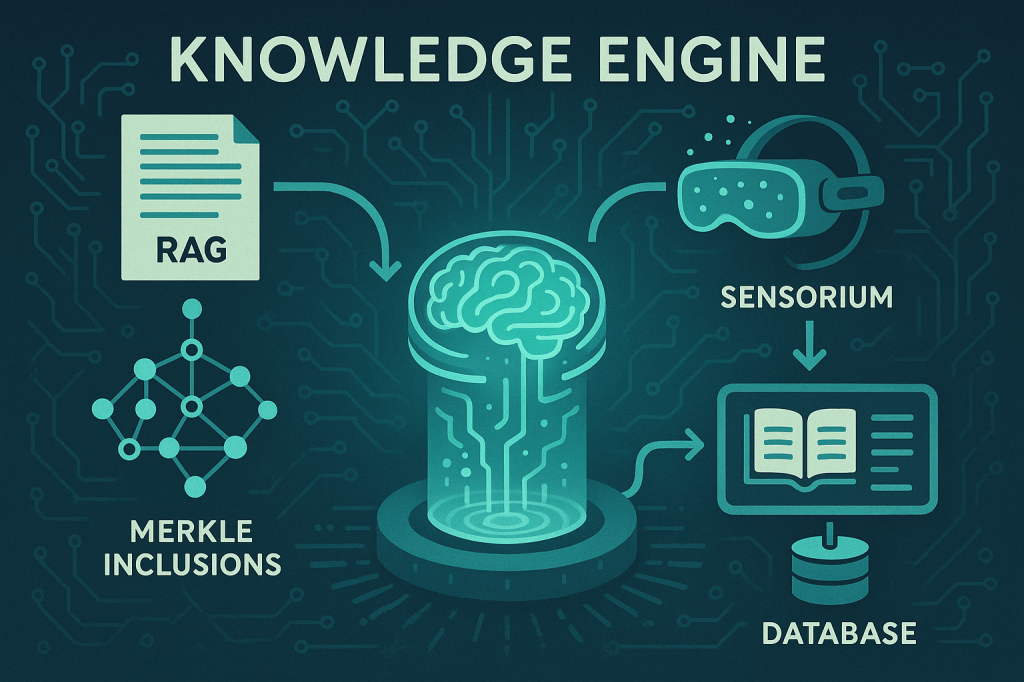
The Plateau of Retrieval
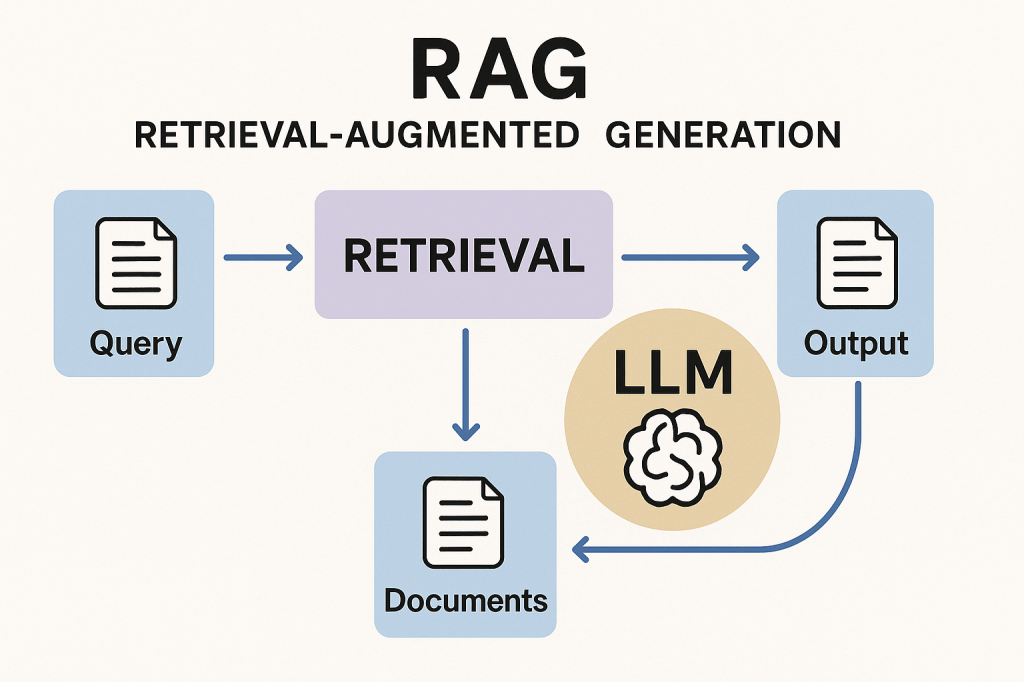
Retrieval-augmented generation (RAG) has become the skeleton key of applied AI. Everywhere you look — enterprise chatbots, knowledge assistants, internal copilots — the architecture is the same: chunk your documents, embed them, push them into a vector database, fetch the top-k neighbors when someone asks a question, and paste those chunks into a prompt.
It works. It works better than bare LLMs hallucinating without guardrails. It’s what let law firms query contracts, hospitals surface clinical guidelines, and developers talk to their codebases.
But after two years of mass adoption, the cracks are showing.
Anyone who has lived inside a RAG stack knows the pain points: the irrelevance of nearest-neighbor search, the noise of context flooding, the brittleness of static embeddings, the uncritical way models swallow whatever text they’re fed. It’s scaffolding. Useful, but fragile.
The field is ready to move. And where it’s moving is towards something deeper: not retrieval wrappers but autonomous knowledge engines.
Where RAG Came From
The lineage is clear.
- Information retrieval (IR) has existed for decades: TF-IDF, BM25, keyword indexing. Search engines were about mapping words to documents.
- Neural IR added dense embeddings: semantic search that captures similarity beyond keywords. This gave us tools like FAISS and Annoy.
- RAG (Lewis et al., 2020) formalized the marriage of dense retrieval and seq2seq models. A BART or T5 decoder, grounded in retrieved context, could outperform purely parametric recall.
- Enterprise RAG (2023–24) scaled this to industry: LangChain, LlamaIndex, Pinecone, Weaviate. With ChatGPT normalizing the LLM interface, retrieval wrappers became the “responsible deployment” strategy.
The result: every enterprise now runs the same playbook. Documents → embeddings → vector DB → retrieval → LLM.
It was a clever bridge. But it was never the destination.
The Problems We Can’t Ignore
The longer you stare at the RAG pattern, the more brittle it looks.
- Shallow recall. Embedding-based nearest neighbors don’t always capture what matters. Queries phrased oddly, answers requiring multi-hop reasoning, or documents split arbitrarily into chunks often yield garbage retrieval.
- Context flooding. With large context windows (Gemini 1.5’s million tokens, Claude 3.5’s 200k), the temptation is to shove everything in. But large doesn’t mean infinite, and models degrade under noisy context.
- Blind trust. An LLM assumes that retrieved passages are true. Poisoned corpora, outdated documents, or adversarially embedded data slide past unchallenged. (The recent “counterfeit contract” poisoning demo on Hugging Face datasets proved how trivial this can be.)
- Static world. Most pipelines are index-once, serve-forever. Updating embeddings or refreshing indexes is slow, brittle, and rarely automated. In fast-changing domains (finance, politics, code), this is fatal.
RAG solved hallucination just enough to buy time. But the time is up.
Breakthroughs Pointing Beyond
Researchers have seen this fragility, and new lines of work are emerging. They aren’t yet the new standard, but they’re signals of what comes next.
- Graph-RAG (Microsoft Research, 2023): Instead of flat vector spaces, knowledge is ingested into graphs of entities and relationships. Retrieval becomes traversal, enabling multi-hop reasoning.
- Differentiable search indexes (Meta FAIR, 2022): Retrieval as a trainable, differentiable operation — blurring search and reasoning into one loop.
- RETRO & memory-augmented transformers (DeepMind, 2022–24): Models with external memory stores, enabling persistent recall across trillions of tokens.
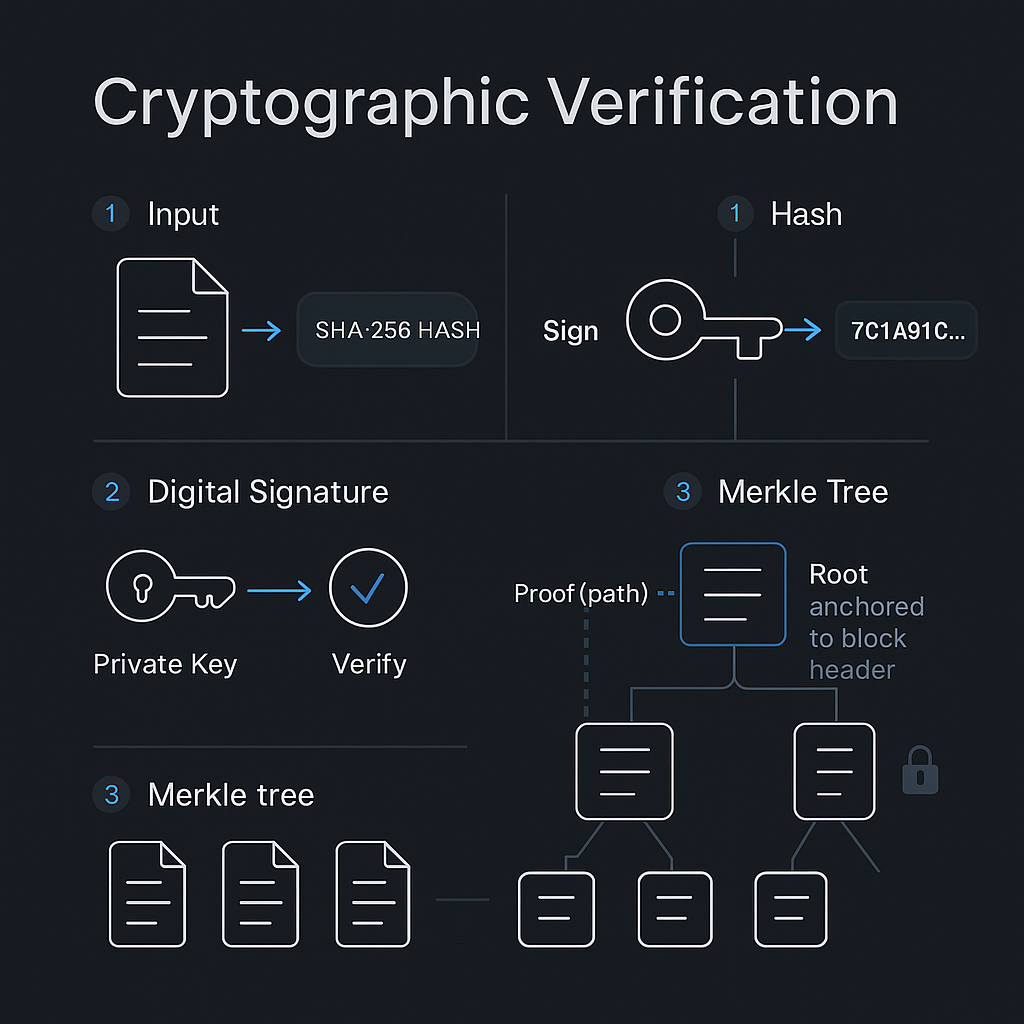
- Merkle trees & provenance proofs (MIT/DeepMind, 2023–24): Cryptographic lineage for datasets and retrieval results, allowing systems to verify sources.
- Dynamic embeddings (Hugging Face, experimental 2024): Embeddings that evolve with new data rather than freezing at indexing time.
Each solves a piece of the puzzle. Together, they hint at a shift: retrieval is not the end, but a primitive inside a living knowledge system.
From Retrieval to Engines
A knowledge engine is not a wrapper. It is a system with four core properties:
It retrieves actively. Queries aren’t just matched to nearest neighbors; they’re decomposed, composed, and reasoned over. Retrieval is planning, not lookup.
It structures knowledge. Information isn’t dropped raw into a context window. It’s distilled into bundles: graphs, summaries, chains of reasoning, compressed embeddings with provenance attached.
It verifies. Every piece of retrieved knowledge carries a source trail, cryptographic proof, or at minimum a confidence calibration. No blind trust.
It evolves. Indexes refresh continuously. Embeddings adapt. Engines prune stale facts and rewrite themselves as the world shifts.
This is the difference between scaffolding and architecture. A RAG stack wraps a model. A knowledge engine is an organism.
Imagining the Blueprint
Picture how this could work.
- Ingestion becomes multi-form: a document is split into embeddings, parsed into a knowledge graph, stamped with temporal metadata, and hashed into a Merkle tree.
- Retrieval becomes dynamic: an LLM query planner decides whether to hit the graph, the vector store, or an API — and can compose multiple sources.
- Structuring means retrieved content isn’t just pasted into the prompt but packaged into a “knowledge bundle”: a compressed summary, a provenance record, and a reasoning sketch.
- Verification attaches proofs — cryptographic signatures, cross-source checks, or probabilistic calibration.
- Generation consumes bundles, not raw text. Each answer carries forward its citations and confidence.
- Autonomy runs in the background: embeddings refreshed, stale nodes pruned, new documents streamed in.
This isn’t fantasy. It’s assembling research already on the table into a coherent system.
Where We Can Push Further
This is where I want to step beyond existing prototypes.
What if embeddings were not static points but living functions? Instead of freezing an embedding at indexing time, the function evolves as the corpus shifts — a neural process that continuously learns to represent its domain. Think embeddings as streams, not snapshots.
What if retrieval itself could be provable? Zero-knowledge proofs could allow a system to say, “I retrieved this passage from corpus X at time Y,” without exposing the whole dataset. This could unlock confidential RAG for enterprises — systems that prove they didn’t invent evidence.
What if knowledge storage wasn’t infinite hoarding but continuous compression? Engines that summarize, distill, and rewrite themselves, shrinking terabytes into denser latent graphs. Knowledge that gets smaller but smarter.
What if engines could trade knowledge? Each engine with its own specialty, exchanging verifiable “knowledge packets” with others. A knowledge economy — not in the metaphorical sense, but as a literal protocol.
And what if engines tracked temporal trajectories of knowledge? Not just “what is true,” but “what was believed, when.” An AI that can answer, “In 2019, what did climate science consensus say about tipping points, and how did that evolve by 2025?”
These aren’t sci-fi. They’re the next steps once you stop thinking of RAG as a product template and start thinking of knowledge as a living system.
Why It Matters
Because knowledge is not just another problem domain. It is the foundation of human coordination.
If AI remains a parrot of static text, it will always feel uncanny and brittle. If it becomes a knowledge engine, it can transform:
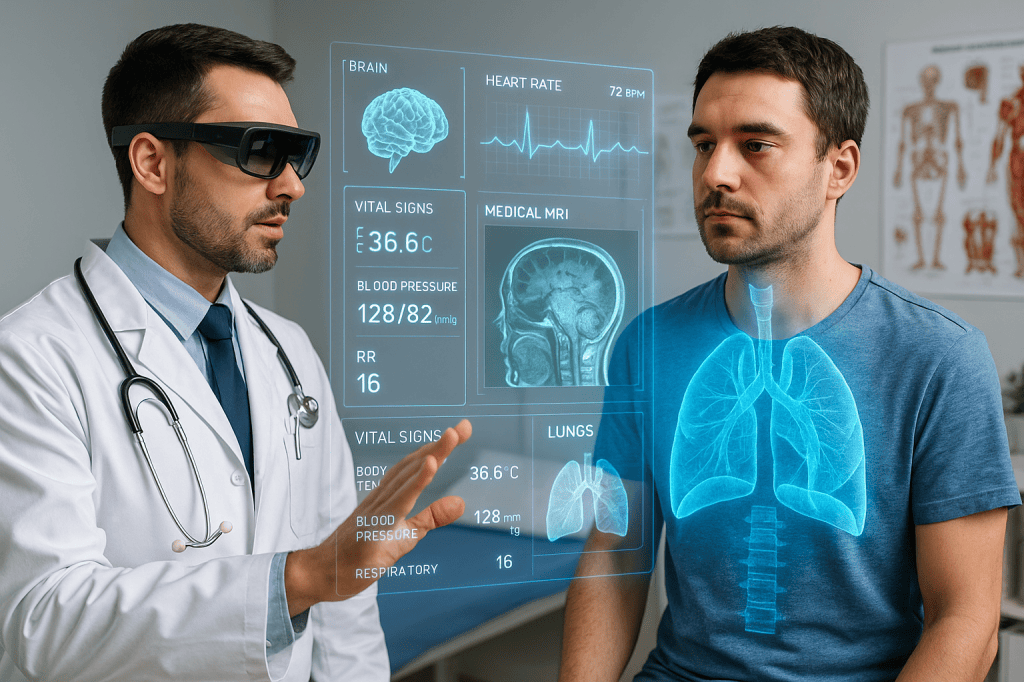
- Medicine → engines delivering real-time, evidence-backed clinical answers, with provenance attached.
- Governance → transparent systems that track policy changes over time, auditable by citizens.
- Journalism → misinformation detection engines that show how narratives evolve, not just what’s trending.
- Science → engines that continuously ingest new findings, compress them into evolving theories, and surface contradictions for researchers.
This is the difference between autocomplete and co-knowledge.
The Hard Problems
There are challenges. Building dynamic, verifiable, evolving knowledge engines will be expensive. Cryptographic proofs can themselves be gamed. Verification doesn’t remove systemic bias. And most developers don’t want to manage a full knowledge OS; they just want a chatbot that works.
But these are surmountable. Distributed architectures can handle cost. Open-source safety work is already proving robustness. And UI layers will make the complexity invisible to end users.
Every major leap in computing looked impossible before it became infrastructure.
Where This Leads
RAG will not disappear overnight. It will live on as the SQLite of AI — light, useful, but limited.
But the frontier is elsewhere: in engines that retrieve actively, structure intelligently, verify rigorously, and evolve continuously.
These engines won’t just serve answers. They’ll serve knowledge that proves itself.
That’s the leap: from static retrieval to living knowledge. From scaffolding to architecture. From autocomplete to co-knowledge.
Closing
When historians look back, they won’t remember RAG as the solution. They’ll remember it as the bridge — the necessary scaffolding that bought us time to build engines worthy of the word “knowledge.”
The future isn’t bigger prompts or bigger databases. It’s engines that make knowledge alive, evolving, and trustworthy.
That’s the rise we’re living through. The rise of autonomous knowledge engines.


Leave a Reply