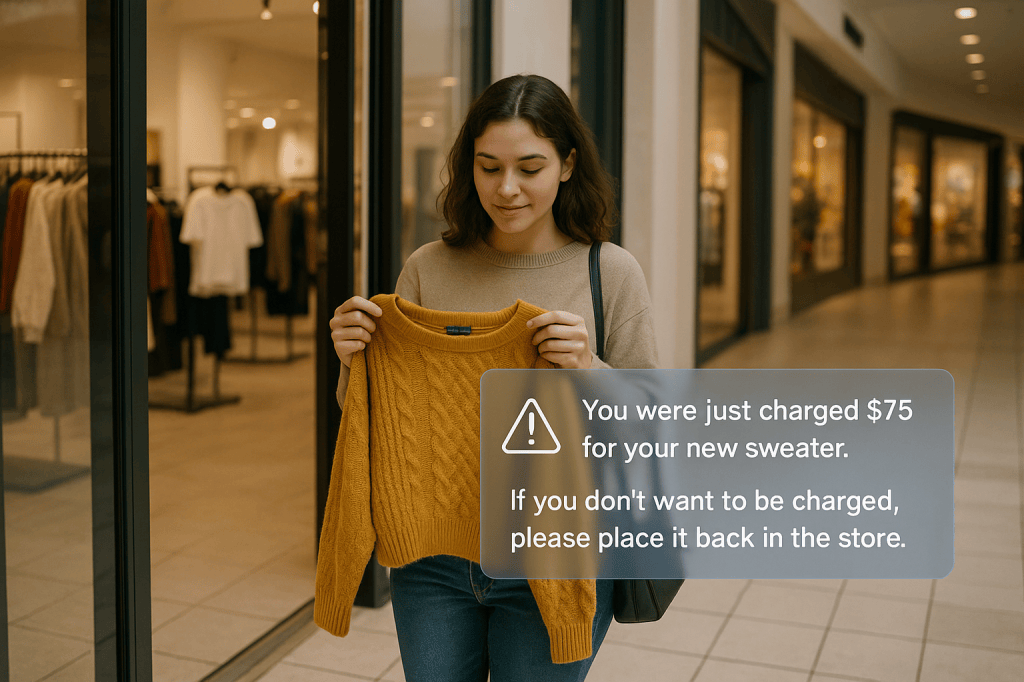
One of the strangest moments I’ve had with technology wasn’t a big launch event or a demo. It was walking out of a store and realizing I’d already paid — without even noticing. No checkout, no card swipe, no phone tap. Just walking.
It felt unsettling, then oddly natural. As if the act of paying, that small ritual we build entire economies on, had quietly dissolved.
This is the world we’re moving toward. A world where payments happen in the background, handled by our agents, linked to our preferences and constraints. Where checkout flows vanish. Where the line between buying and living blurs.
And the consequences — cultural, financial, emotional — are bigger than most of us realize.
From Swipe to Silence
Payments have always been rituals. Coins exchanged. Checks signed. Cards swiped. Even Apple Pay, for all its speed, still asks for a thumb press or a glance. Each moment is a tiny ceremony: the point where value changes hands.
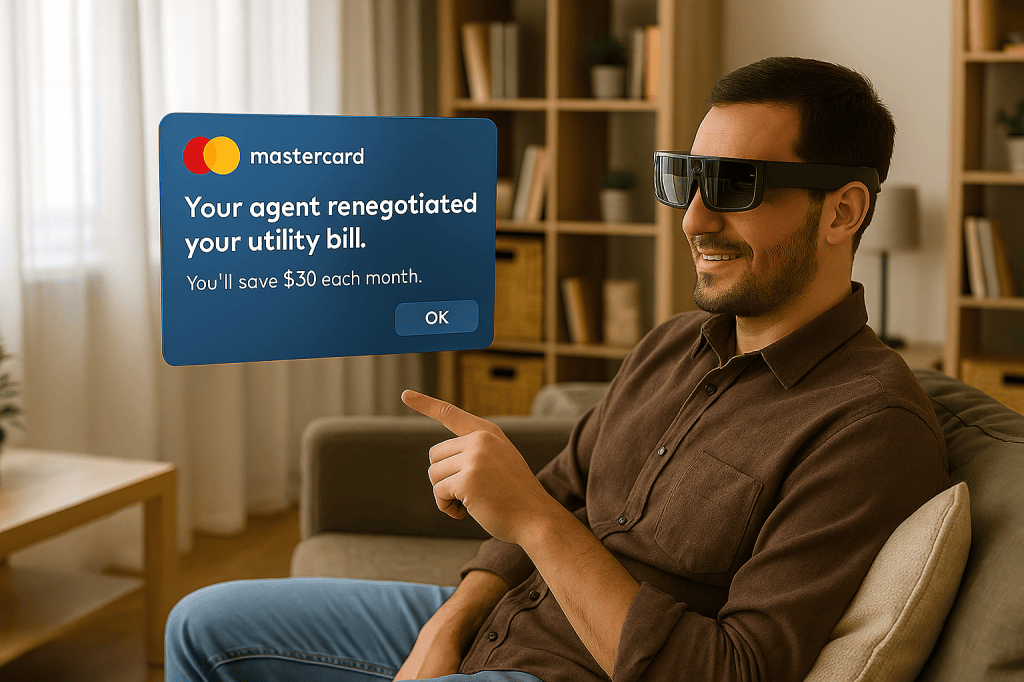
Invisible payments break that ritual. Your agent agrees to terms, verifies budget, and moves money without requiring you to act.
Amazon tried this with its Just Walk Out stores, using cameras and sensors to detect what you took. The experiment was abandoned for larger stores because the tech was too messy — replaced by smart carts that handle the same task more reliably. (GeekWire, 2024)
But agents will make this seamless. Whether you’re booking a flight, paying a utility bill, or picking up dinner, the transaction happens offstage.
As Visa’s Mark Nelsen put it: “The next era of payments is about making them invisible — embedded in the flow of life, not interrupting it.”
The Relief of Frictionless
There’s something liberating about it. No more fumbling for wallets, no more entering card numbers. For parents juggling kids, for elders managing medications, for commuters rushing to trains — frictionless payments can feel like a gift.
India’s Unified Payments Interface (UPI) already shows the scale of this shift. Over 10 billion transactions flow through UPI each month, many triggered by a scan or an agent rather than a human tap. For millions of people, the idea of pulling out cash already feels quaint.
“Once you remove friction, adoption accelerates exponentially,” says Nandan Nilekani, architect of India’s digital ID and payments infrastructure. “The biggest barrier is no longer technology — it’s trust.”
The Trust Problem
Because trust is the flip side of invisibility.
When you don’t notice the act of paying, you may also lose awareness of what you’re spending. Behavioral economists call this “decoupling”: the psychological gap between buying and feeling the cost.
Credit cards already did this. Studies show people spend 12–18% more when using cards instead of cash. Agents and invisible payments could magnify that.
A study from the University of Chicago found that when people used auto-reordering systems, they spent 27% more annually on household staples, often without realizing it.
The risk isn’t just overspending. It’s disconnection — forgetting the shape of your financial life because the rituals of payment have vanished.
Guardrails for Confidence
If invisible payments are inevitable, the question becomes: how do we design them responsibly?
- Trust Receipts: After each transaction, your agent files a simple, human-readable record: what was bought, why it matched your constraints, how it compared to alternatives.
- Speed Bumps: For large or unusual transactions, your agent should pause: “This is 3x your typical spend in this category. Confirm?”
- Biometric Nudges: Payments linked to stress signals — if your heart rate spikes or you’re flagged as fatigued, the system may delay impulsive purchases.
These aren’t barriers for the sake of friction. They’re confidence-building rituals — new ceremonies for an invisible world.
As Mastercard’s Raj Dhamodharan said: “Frictionless doesn’t mean thoughtless. Trust requires touchpoints, even if they’re light.”
Everyday Ripples
Think about the lives these systems touch:
- The elderly parent: No longer risks forgetting bills — the agent pays them, but with clear summaries so they feel in control.
- The small business owner: Inventory replenishes automatically when stocks run low; cash flow is smoothed but always visible in a daily digest.
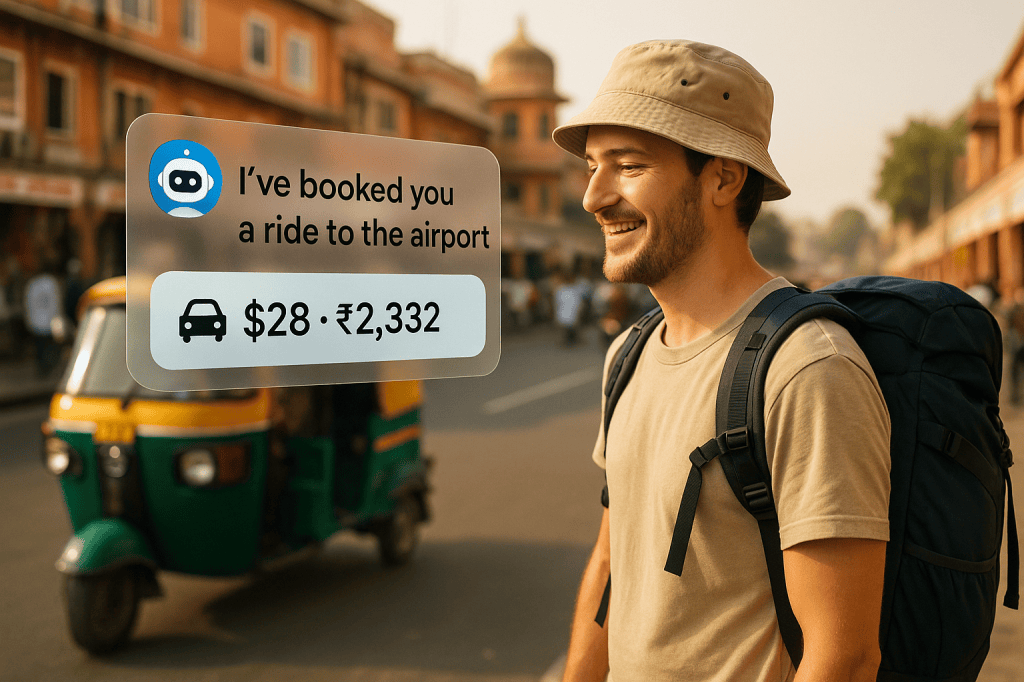
- The traveler: Steps into a rideshare abroad, no fumbling with currency; their agent handles the exchange rate and payment, instantly.
Each case shows the double edge: liberation on one side, disorientation on the other.
The Business Stakes
For companies, invisible payments change the battlefield.
- Checkout optimization — once the holy grail of e-commerce — becomes irrelevant. There is no checkout.
- Brand experience shifts from “ease of purchase” to “clarity of post-purchase.” The receipt becomes the new brand touchpoint.
- Revenue models may shift from one-time sales to dynamic subscriptions negotiated agent-to-agent, with pricing adjusting in real time.
It’s not hard to imagine a future where Netflix doesn’t charge you $15/month, but your agent negotiates with theirs each week depending on what you actually watched.
Regulation and Oversight
Governments will have a role here, too.
The Reserve Bank of India already requires explicit consumer consent for recurring payments above certain thresholds. The European Union’s Payment Services Directive 2 (PSD2) enforces strong customer authentication in digital flows.
As payments become agentic, regulators will likely demand:
- Transparency logs: itemized records of agent-initiated transactions.
- Revocability: the right to cancel within a set window if an agent made a mistake.
- Equity measures: ensuring cash and manual payments remain available for those excluded from agent systems.
Without these guardrails, invisible payments could feel less like empowerment and more like extraction.
Reflections
I keep thinking about that moment walking out of the store, halfway home before realizing I’d already paid. It felt like a magic trick. Money had moved, and I hadn’t even noticed.
That’s the paradox of invisible payments: the more seamless they become, the more important it is to keep them visible in our minds.
Done wrong, they blur us into passive consumers, disconnected from our own finances. Done right, they free us from hassle while giving us new clarity into how and why we spend.
The future of payments isn’t just about speed. It’s about trust, ritual, and the human need to feel the exchange. Even when we don’t swipe or tap, we still need to know when value has moved — and that it moved on our terms.
Because in the end, paying isn’t just a transaction. It’s a story we tell ourselves about control, fairness, and choice. And those stories matter, even when the act itself disappears.


Leave a Reply